
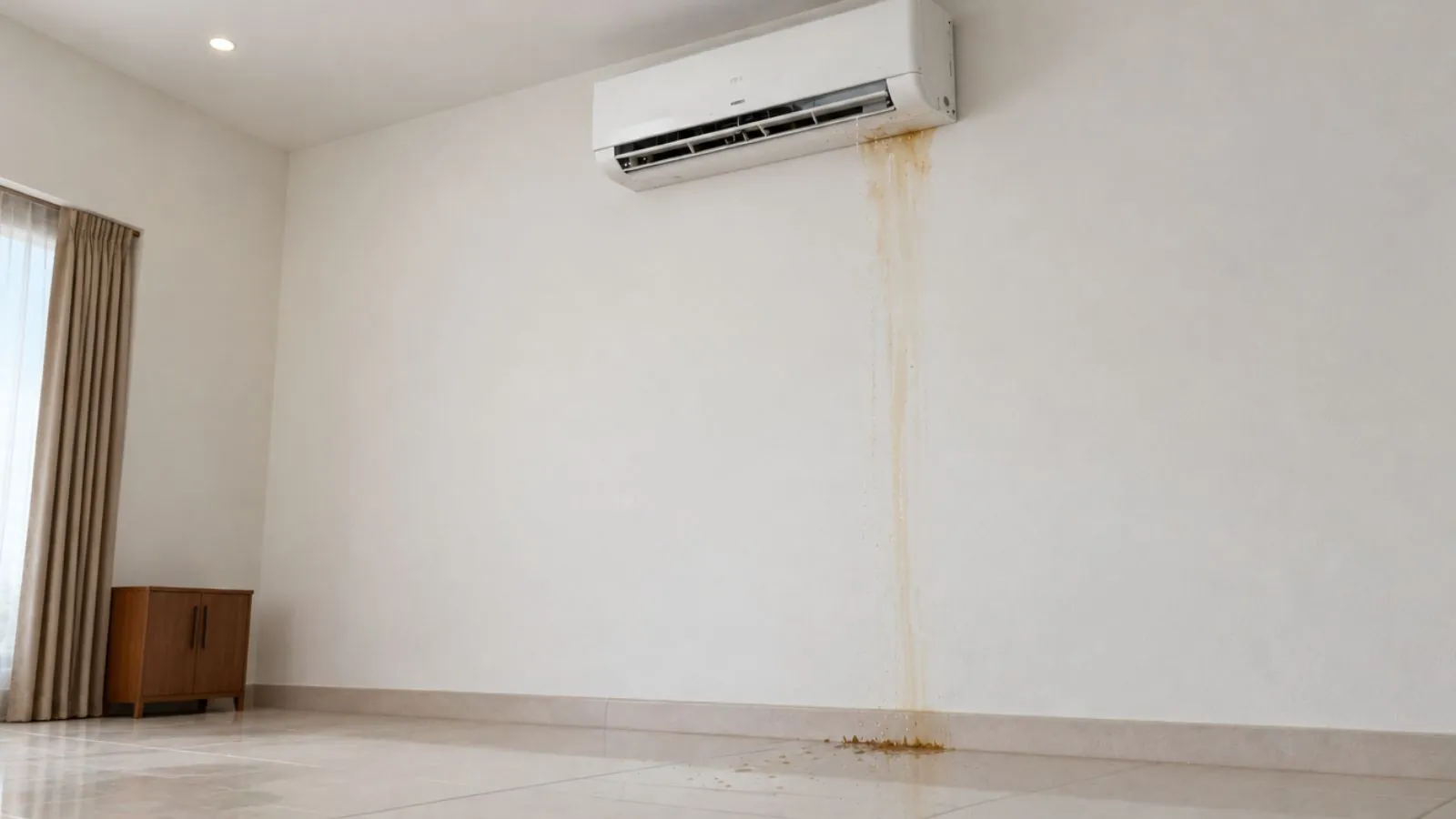
Air conditioning removes moisture from the air, and that water is meant to leave through a condensate line. When the line clogs, the drain pan cracks or a coil freezes and melts, the water goes into the structure instead. It often leaks slowly and for a long time, so the first sign is usually a stain, a damp closet or a musty smell. Call (833) 521-1033 if you are seeing it now.
Where AC water comes from
Clogged condensate line
Algae and debris can block the drain line, and the pan overflows into the ceiling or floor.
Cracked or rusted drain pan
An old pan under an attic air handler can split and drip.
Frozen evaporator coil
Ice builds on the coil, then melts faster than the pan can handle.
Disconnected or damaged line
A pipe that came loose can empty into insulation or a wall.
In many houses the air handler sits in the attic or a closet above finished rooms. Water from there soaks insulation first, then the ceiling below. Turn the system off at the thermostat so it stops making more water, and let an HVAC technician clear the line or replace the pan.
What a moisture check finds
Because AC leaks are slow, the damage is often larger than the stain suggests. A moisture meter and thermal camera trace the wet area across the ceiling, wall tops and insulation above. They also show whether the framing has stayed wet long enough to need mold attention.
| Sign | What it can mean | Next step |
|---|---|---|
| Brown ring on ceiling below the air handler | Overflow from pan or line | Turn off system, check moisture, call HVAC tech |
| Damp or musty closet | Leak at an air handler closet | Moisture check and drying |
| Water in the drain pan | Clogged line | Clear line, check surrounding materials |
| Ice on the coil | Airflow or refrigerant issue | Turn off, let it thaw, call HVAC tech |
AC water in the ceiling?
Call for a moisture check and drying plan.
Drying and repair after an AC leak
Wet insulation above a ceiling is removed. Drywall that is soft or stained through is cut out, and the cavity is dried with air movers and dehumidifiers. Once readings are dry, new drywall, texture and paint finish the repair.
A leak that ran for a long time may have reached the wood framing. If you see dark spots or smell something earthy, read the mold remediation page for how testing and containment work. The wet ceiling side is explained in more detail on the ceiling water damage page, and walls are covered on wall and drywall repair.
Prevention is simple. Have the condensate line flushed at the start of the cooling season, and install a float switch that shuts the system off if the pan fills. An HVAC technician can do both, and they are far less costly than a ceiling repair.
Before the technician arrives
Turn the system off at the thermostat. Keep clear of a ceiling that bulges. Do not touch an air handler with wet hands. Place a bucket under any drip and leave electrical fixtures alone.
Drying after a condensate leak follows ANSI/IICRC S500, the recognized restoration standard, and growth that has started falls under S520, the standard for mold remediation.
Costs and insurance
Length of the leak
Slow leaks that ran for months reach more material.
Location of the air handler
Attic, closet and basement units affect different rooms.
Insulation and ceiling involved
Both need removal when saturated.
Mold presence
Growth adds containment and testing.
Finish repair
Texture, paint and trim are separate from drying.
Gradual leaks are often treated differently from sudden ones in a policy, and HVAC equipment itself may not be covered. Ask your insurer and document everything. We provide readings and a written scope, and we cannot promise approval. Call (833) 521-1033 and ask for the scope and price in plain terms before any work.
Air handler leak calls come from New Canaan, Darien, Norwalk, Wilton and Stamford. Westport, Weston, Greenwich, Ridgefield and Redding are confirmed by phone.
Common questions
Why is my ceiling wet under the air handler?
Most often the condensate line or drain pan is blocked or cracked. Turn the system off and have an HVAC technician fix it, then have the ceiling checked for moisture.
Is an AC leak always a slow leak?
Often, but a disconnected line can release a lot of water at once. Either way the ceiling and insulation should be checked.
Can an AC leak cause mold?
It can, because slow leaks keep materials damp. A moisture check shows whether the framing and insulation are still wet.
Who repairs the AC unit?
An HVAC technician repairs the unit and the line. We deal with the water damage in the building.