
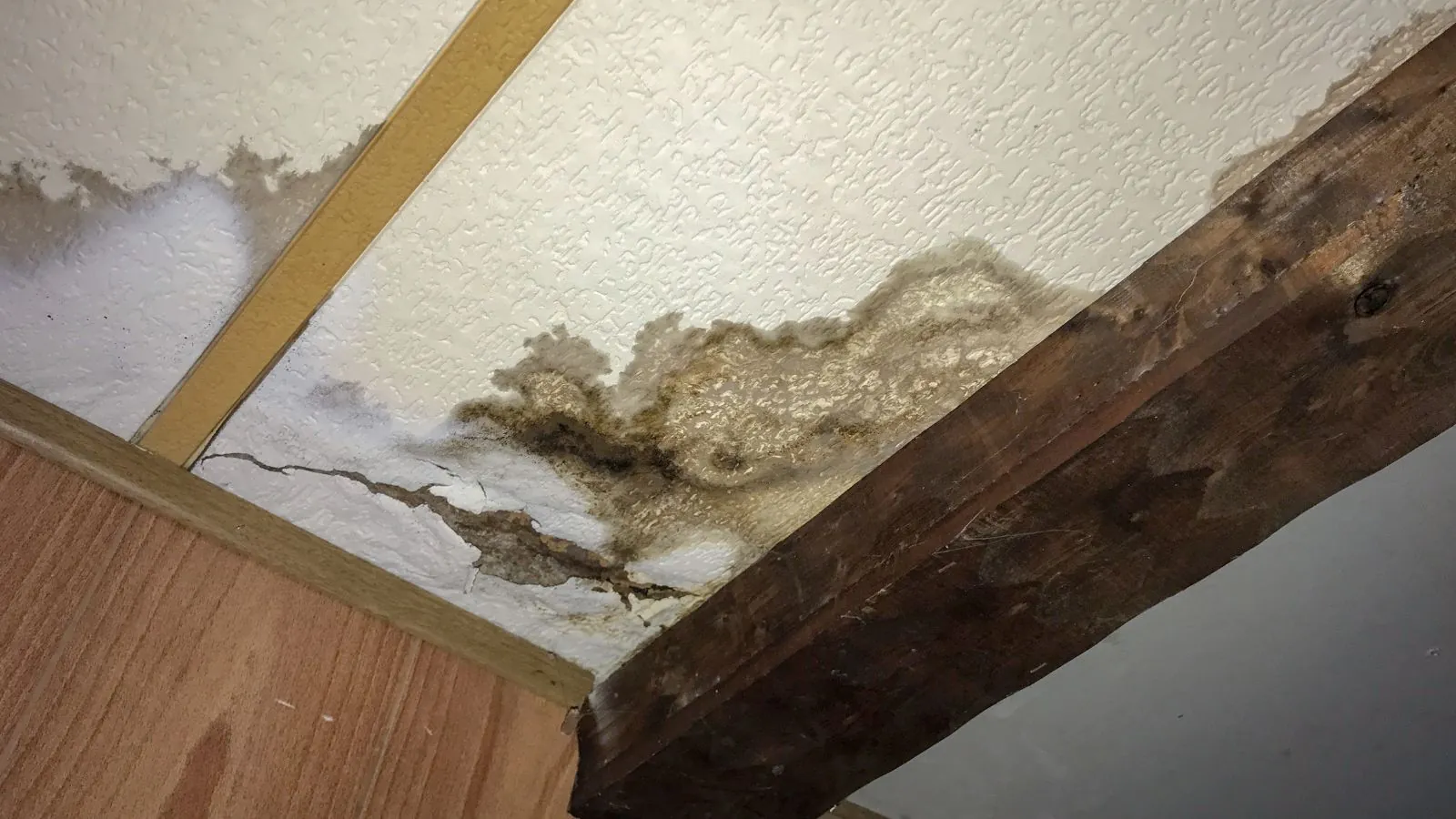
Ceiling water damage repair starts with working out where the water is coming from, because the stain on the ceiling is only where the water ended up. It might have crossed an attic, run along a joist or come from the bathroom upstairs. If a ceiling is dripping or bulging now, put a bucket under it, keep people out from beneath it and call (833) 521-1033. The line is answered 24/7.
A sagging ceiling is an emergency
A ceiling that sags, bulges or drips is holding water in the drywall and insulation above it, and the weight can bring it down. Do not stand under it. If water is dripping, set a bucket to catch it and place a towel nearby. A small hole made at the bottom point of a bulge can relieve the water in a controlled way, but only if you can do it from a safe angle and away from lights and wiring.
If water is falling through a light fixture or you see sparks, stay away, switch off the circuit only from a dry panel and call 911 or the utility. A ceiling fan that fills with water is the same hazard.
Where the water came from
Upstairs bathroom or toilet
A failed supply line, a toilet seal or an overflow can drip for days before a stain forms below.
Roof leak
Water enters at flashing, a valley or damaged shingles, soaks insulation and shows up as a stain.
Attic or HVAC line
An attic air handler, a condensate line or a cracked pipe can soak insulation above a ceiling.
Closet and corner stains
A closet ceiling often sits under the roof edge or a bathroom above, so check both.
The first job is to stop the source. A roofer or plumber handles the repair, and we handle the water damage that remains. A thermal camera can show wet insulation above a ceiling, and a moisture meter confirms how far the wetness extends before anyone cuts into it.
Roof leak water damage
Roof leaks cause a large share of ceiling stains. Water slips past a failed shingle, flashing or a skylight edge, then runs down the underside of the decking and soaks insulation. By the time a stain shows below, the attic may be wet across a wide area.
Wet insulation does not dry well and holds moisture against framing, so it is often removed. The cleanup follows the water: remove saturated insulation, dry the framing and ceiling with air movers and dehumidifiers, and check for mold on the wood above. We do not repair roofs or replace shingles. We deal with the interior water damage, and a roofer deals with the opening that let it in.
A storm that lifted shingles is covered more widely on our storm water damage page, and a leak that ran down inside a wall continues into wall and drywall repair.
| What you see | Likely meaning | What to do first |
|---|---|---|
| Brown ring that is damp | Active leak from above | Contain water, find the source, call |
| Brown ring that is dry | Past leak, may be old | Have moisture checked, watch for growth |
| Bulge or sag | Water held in drywall | Keep clear, relieve safely or call |
| Peeling paint and soft spot | Long exposure to moisture | Expect cut-out and repair |
Ceiling leak in progress?
Call the 24/7 line and describe what you see.
Drying a wet ceiling and the cavity above it follows ANSI/IICRC S500, the water damage restoration standard.
Repairing a water-damaged ceiling
A small, dry stain may only need sealing and paint after the source is fixed. A saturated section usually needs to be cut out, because drywall that has been soaked loses strength and can sag again. The crew removes the damaged section, dries the cavity, and installs new drywall, tape, texture and paint once readings are dry.
Stain-blocking primer matters, since ordinary paint over a water stain shows through. If the ceiling has an old texture such as popcorn, we flag it before cutting, because older texture coatings can be tested for asbestos before they are disturbed. Ask your contractor about that step on an older home.
Source of the water
A bathroom supply line and a roof leak need different cleanup.
Area wet above and below
Attic insulation and ceiling area both count.
Ceiling type
Drywall, plaster and textured ceilings are repaired differently.
Drying days
Insulation and framing dry more slowly than surface drywall.
Finish work
Texture matching and painting rooms adds to the scope.
Insurers often respond to sudden and accidental ceiling damage, such as a burst supply line, while long-term roof wear may be treated differently. Ask your insurer, photograph the stain and the attic if you can reach it safely and keep receipts. We provide moisture readings and a written scope, and we cannot promise approval.
Ceiling leak calls come from New Canaan and from Darien, Norwalk, Wilton, Stamford and Greenwich. Westport, Weston, Ridgefield and Redding addresses are confirmed by phone.
Common questions
Do you handle ceiling leak emergencies at night or on weekends in New Canaan?
Yes, at any hour. Dial (833) 521-1033 and say whether the ceiling is dripping or sagging, and a crew is arranged. Keep people out from under the area while you wait.
Can I leave a stained ceiling alone if it is dry?
A dry stain may be an old leak, but it is worth confirming with a moisture meter. A stain can return if the source was never fixed, and mold may have started above the ceiling.
Does a ceiling leak from a roof count as water damage?
Yes. The roof is the source, and a roofer repairs it. The wet ceiling, insulation and framing are water damage that we dry and repair.
How long does ceiling repair take?
Drying often takes several days, then drywall, texture and paint add more steps. The schedule depends on how much was wet and how long the finishes need to cure.