
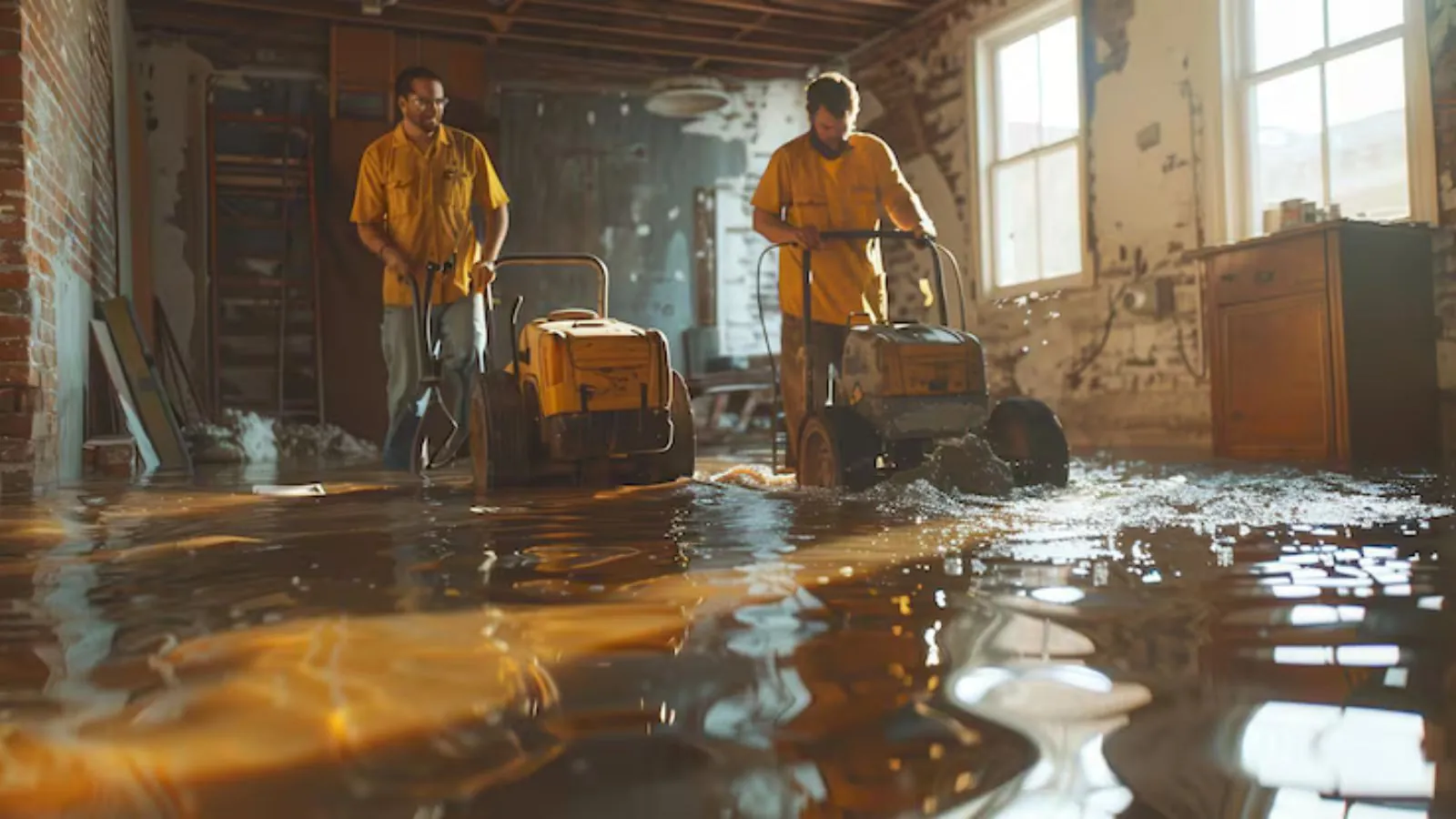
Water extraction is the first physical step when standing water is present. Pumps and wet vacuums move the water out before anything else can begin. If you are looking at ankle-deep water in a laundry room or a kitchen floor covered edge to edge, this is the page that matches. Call (833) 521-1033 and the line gets a crew moving. While you wait, stop the source if it is safe and keep children and pets out of the water.
When standing water is an emergency
Treat standing water as urgent when it is deeper than a thin film, when it is spreading toward a finished room, or when it has been there overnight. Water wicks upward into drywall and baseboard, and it soaks carpet pad within hours. The longer it sits, the more material has to be torn out instead of dried.
Treat it as dangerous when it touches outlets, a panel, a furnace or a water heater. Do not wade in. Call the utility or 911 about an electrical or gas risk before you call us. Cut power at the panel only if you can reach it from dry ground. Water that came up from a floor drain or from outside is contaminated, so keep skin contact to a minimum.
Do this before the crew arrives
Shut off the water at the fixture or the main valve. Photograph the water level and the damaged items. Move rugs, electronics and paper to a dry room. Do not run a household vacuum on water, and do not use ceiling fans or space heaters near wet areas.
How extraction works
A crew starts by finding where the water is deepest and where it is hiding. Submersible pumps handle depth. Truck-mounted or portable extraction units handle the remaining film, and wands pull water out of carpet and pad. On hard floors, squeegees and wet vacuums finish the job.
Extraction removes the bulk of the water, but it does not dry the building. Moisture stays in framing, subfloor and the back of drywall, so a moisture meter and a thermal camera check the surrounding rooms. Then the work moves to air movers and dehumidifiers. Our structural drying page explains that second stage and how readings decide when it is done.
| Situation | What extraction involves | What usually follows |
|---|---|---|
| Clean water from a supply line | Pump-out, wet vacuum, carpet wand | Drying equipment, pad removal if soaked |
| Washer or dishwasher overflow | Wet vacuum, cleaning of the floor | Drying, often baseboard checks |
| Water from a floor drain or outside | Extraction with protective equipment | Removal of porous materials, sanitizing |
| Water that sat for several days | Extraction plus a closer look for mold | Material removal, then drying |
Need a crew for standing water?
Call now and describe the water depth and the room.
Standing water in New Canaan homes
After the remnants of Hurricane Ida passed through Connecticut in 2021, the town reported basement flooding in some homes, including some that had never flooded before. That is a useful reminder that a heavy rain can put water into a lower level without any pipe failing. If a sump pump stopped during a power outage, the water arrives quietly and the extraction need is the same.
If the water came from outside, the same event is usually covered on our flood damage cleanup page, and a lower-level room has its own notes on the basement water damage page. If the water came from a pipe, start at the source on the burst pipe page.
Removal of water on this kind of job follows ANSI/IICRC S500, the published standard for professional water damage restoration, which also governs how the water category is judged.
What affects the price of extraction
Water depth and volume
More water takes more pump time and more crew.
Water category
Clean water and contaminated water carry different safety and disposal needs.
Rooms and floors reached
A single room is a short job, while water that crossed several rooms is not.
Materials soaked
Carpet and pad, hardwood and drywall each need a different plan.
What follows extraction
Drying days and any rebuild are priced separately from the pump-out.
Insurance usually responds to sudden and accidental water, such as a failed hose or pipe, and often does not respond to flood or gradual seepage. Check your policy and call your insurer early. Photos taken before extraction help, and we keep a written record of the work. We cannot promise a claim will be approved. To hear how scope and price are explained before work begins, call (833) 521-1033.
Coverage includes New Canaan and the towns around it, such as Darien, Norwalk, Wilton, Stamford and Westport. If your address is in Weston, Ridgefield or Redding, call and dispatch will confirm.
Common questions
Do you handle water extraction emergencies at night or on weekends in New Canaan?
Yes. The line is answered 24/7, including weekends and holidays. Call (833) 521-1033, give your New Canaan address and describe where the water is. A crew is arranged and the dispatcher tells you what to do until they arrive.
Can I just use a wet vacuum myself?
A shop vacuum can remove a thin puddle of clean water, but it will not reach water in carpet pad, under baseboards or in a wall cavity. It is also unsafe on electrically live areas and on contaminated water. For anything beyond a small spill, professional extraction and drying is the safer route.
How long does extraction take?
Removing standing water usually takes hours rather than days, depending on depth and the size of the area. Drying afterward takes longer and runs for several days with daily meter readings.
Is water extraction the same as water damage restoration?
It is one stage of it. Extraction removes the water. Restoration also covers drying, cleaning, removing materials that cannot be kept and rebuilding what was lost.