
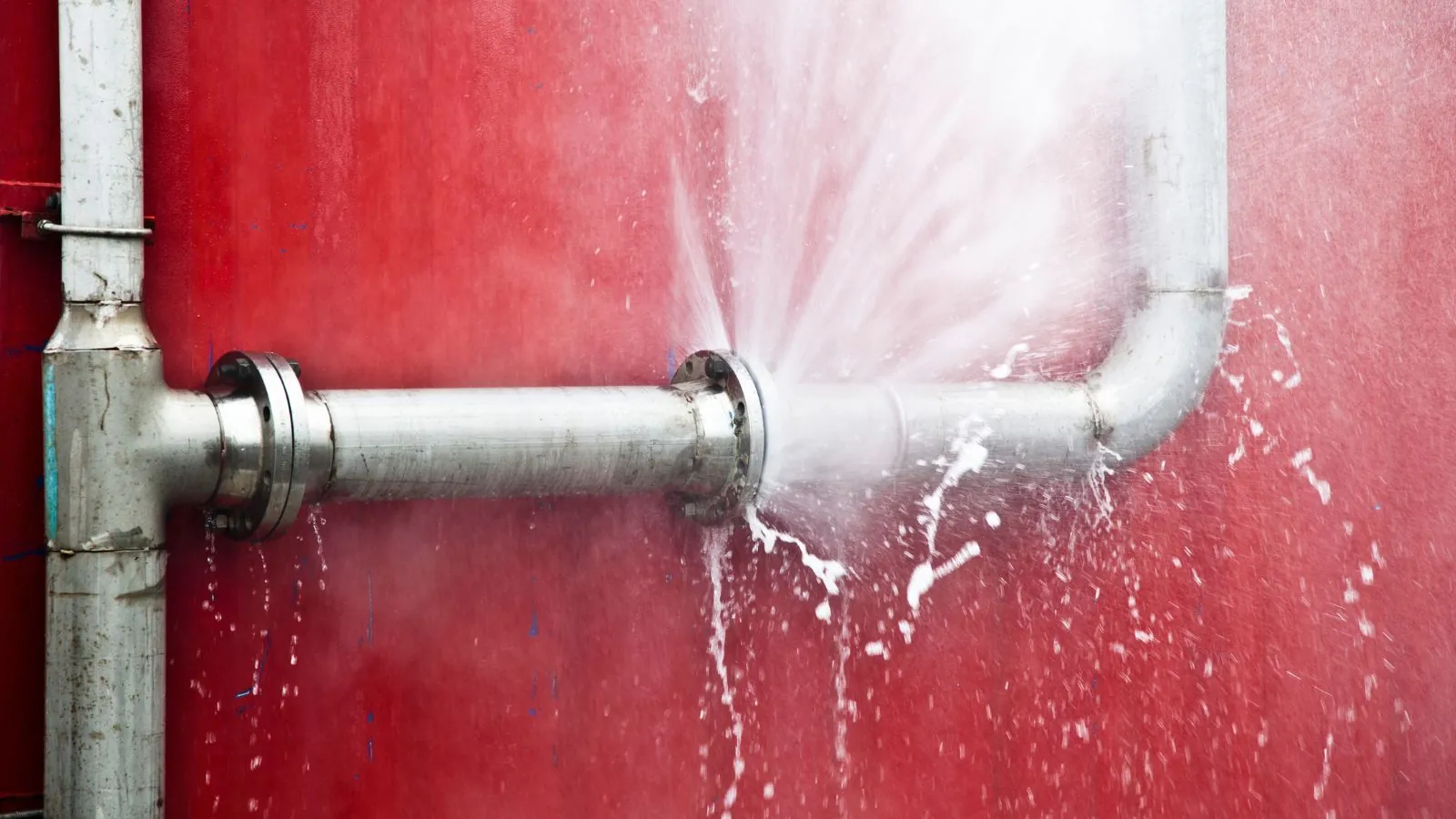
Burst pipe water damage is different from a slow drip because the supply side of a house is under pressure all day. A split pipe can release many gallons in minutes, and the water keeps coming until someone closes a valve. If it is happening now, find the main shutoff first, then call (833) 521-1033. The line is open 24/7 and a crew can start extraction and drying as soon as they are on site.
Pipe burst and water still running
The main water shutoff is usually where the service line enters the house, often in a basement, utility room or garage, and it is a wheel or a lever. If your home is on public water, you may also have a curb valve outside, but that one usually needs a special key and is a last resort. If you rely on a private well, turn off the well pump at its breaker only if the panel is dry.
Once the water is off, open a faucet on the bottom level to drain the line and relieve pressure. Look up before you walk. A ceiling that is bulging or dripping may be holding more water than it looks like, and it can give way. Stay out of rooms where water is coming through light fixtures, and call 911 or the utility if you see sparks or smell gas.
Electrical safety comes first
If water is near an outlet, a panel or a ceiling fixture, do not stand in it and do not flip switches. Call the utility or 911 before you call a restoration crew. Cut power only if the panel is dry and you can reach it without crossing wet floor.
Where burst pipe water goes
Water from a pressurized line follows gravity and the path of least resistance. It runs along joists, drops through ceilings, travels under baseboards and fills wall cavities from the inside. A pipe that burst in a second-floor wall can wet the first-floor ceiling, the kitchen below and the basement beneath that, so the visible stain is rarely the whole loss.
A crew traces that path with a moisture meter and a thermal camera, then opens the spots that readings flag. Clean supply water is Category 1, which gives drywall, hardwood and some carpet a good chance of being dried instead of replaced. That chance shrinks quickly, which is why the first hours count.
| Where the pipe burst | What gets wet | What a crew checks |
|---|---|---|
| Inside an exterior wall | Wall cavity, insulation, floor below | Baseboards, cavity readings, ceiling beneath |
| Under a bathroom or kitchen floor | Subfloor, cabinets, ceiling below | Subfloor moisture, cabinet bases, trim |
| In an attic or ceiling space | Insulation, ceiling drywall, rooms below | Ceiling sag, insulation saturation, framing |
| In a basement or utility area | Floor, stored items, lower walls | Standing water, drywall base, stored cartons |
Water off but the house is wet?
A crew can start extraction and set up drying equipment.
Cleanup and drying after a burst pipe
Work usually runs in this order. Extraction removes standing water. Wet carpet pad and soaked insulation come out. Air movers and LGR dehumidifiers dry the structure, and meters are read each day. Walls that stay wet are opened so air can reach the cavity. You hear the plan, including which materials are at risk, before the equipment goes in.
The pipe itself belongs to a plumber, and we do not repair plumbing. What we do is the water damage that follows. If the break happened in a kitchen, see our notes on kitchen water damage, and if it opened a wall, the wall and drywall repair page explains what gets cut and what gets dried. A running line often also soaks the ceiling below, which is covered under ceiling water damage.
The drying that follows a burst pipe is guided by ANSI/IICRC S500, the published standard for water damage restoration, which sets how moisture is measured and when a structure counts as dry.
Costs and insurance for a burst pipe
How long the pipe ran
Minutes and hours produce very different amounts of water.
Floors and rooms reached
A one-room loss and a three-floor loss are not the same job.
Materials involved
Drywall, hardwood, carpet and insulation each have a different outcome.
Drying days and equipment
More wet material means more equipment and more days.
Rebuild scope
Paint and trim are one price, cabinets and subfloor another.
A burst pipe is the kind of sudden and accidental event that homeowners policies often cover, though details such as the deductible and the cost of the pipe itself vary. Check your policy, photograph everything before it is moved and keep receipts. We cannot promise coverage. If you want the scope and price walked through before a crew touches anything, call (833) 521-1033.
Burst pipe calls reach us from New Canaan and from Darien, Norwalk, Wilton, Stamford and Greenwich. Weston, Westport and Ridgefield addresses can be confirmed by phone.
Common questions
Do you handle burst pipe emergencies at night or on weekends in New Canaan?
Yes. The dispatch line is answered 24/7. A burst pipe at 2 a.m. gets the same response as one at noon. Call (833) 521-1033, say that the pipe burst and whether the water is off, and a crew is arranged.
Who fixes the pipe?
A licensed plumber repairs the pipe. We handle the water damage: extraction, drying, cleaning and repair of the affected materials. Many homeowners call both at the same time.
Will insurance cover a burst pipe?
Often, because a burst pipe is sudden and accidental, but it depends on your policy, the cause and your deductible. Call your insurer promptly and ask what is covered. We document the damage, and we cannot promise approval.
Can drywall that got wet from a burst pipe be kept?
Sometimes. Clean water that is removed quickly may let drywall dry in place. Drywall that stayed wet for days, swelled or went soft usually has to be cut out. Moisture readings settle the question.