
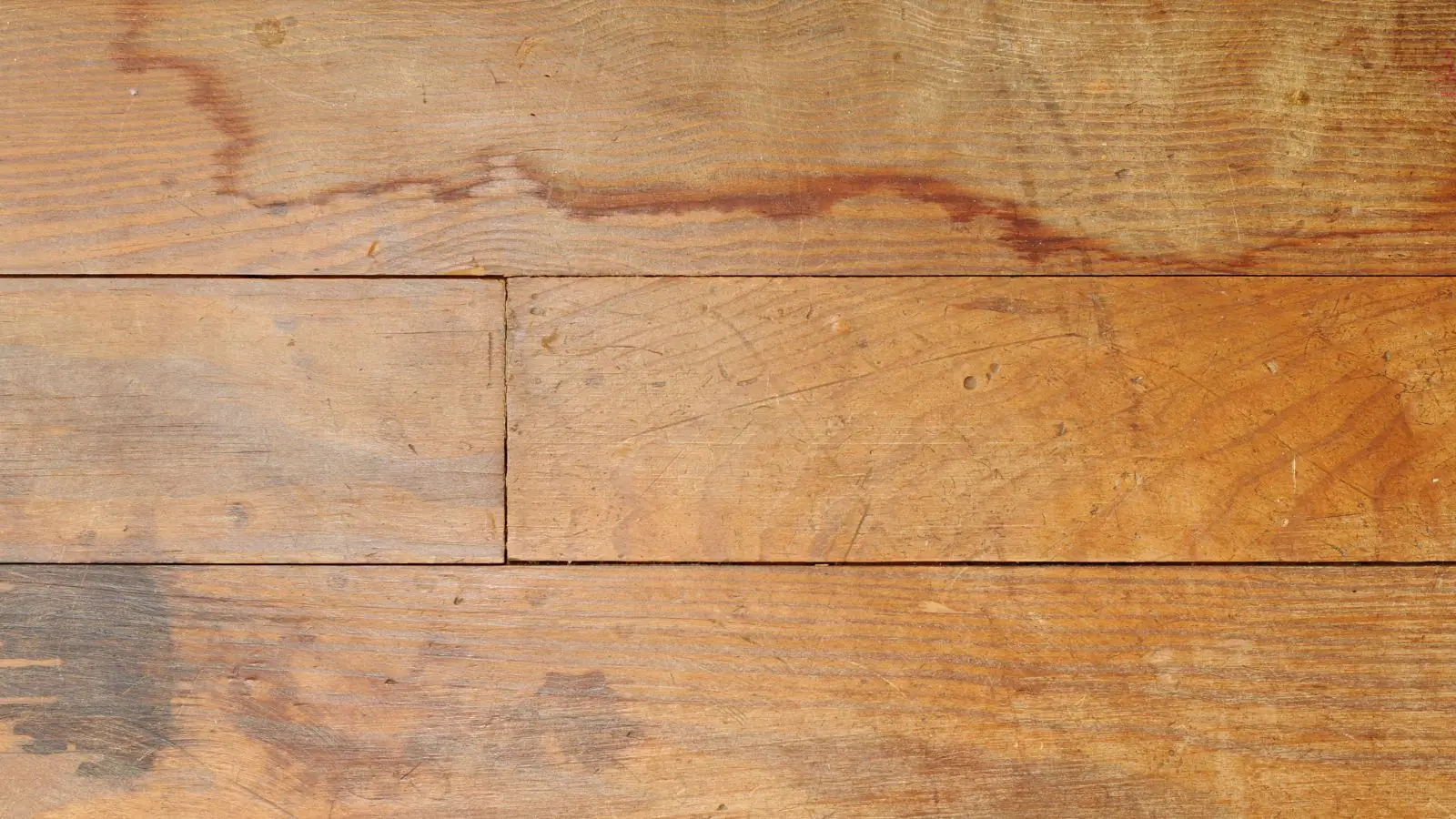
Hardwood is a natural material that takes on moisture from below and above. Water from an appliance, a pipe or a damp crawl space makes boards swell, cup at the edges or buckle off the subfloor. Dealing with it early gives the wood a chance to dry and flatten. Call (833) 521-1033 if your floor has been wet.
Boards cupping, lifting or turning dark
Cupping is when board edges rise higher than the centers, which happens when the bottom of the board is wetter than the top. Crowning is the reverse. Buckling is when boards lift off the subfloor, and black or gray staining at seams can mean moisture has been there a while.
Do not sand or refinish a floor that has not dried. A moisture meter should read in line with the subfloor and with a dry reference area first. Sanding a wet floor can lock in damage and trap moisture.
| What you see | What it means | Likely path |
|---|---|---|
| Edges rising slightly | Moisture from below | Dry, wait, then sand and refinish if flat |
| Center rising | Moisture from above, then drying | Dry and monitor |
| Boards lifting off the subfloor | Heavy water exposure | Remove and replace sections |
| Dark stains at seams | Longer exposure | Check for mold, replace boards if needed |
How hardwood is dried
After extraction, a crew places drying equipment and may lift a few boards or drill small holes so air reaches the subfloor. Specialty drying mats pull moisture from the wood. Readings are logged each day. Most floors are given time to settle before a decision is made on refinishing.
Where the water came from affects the decision. A clean supply line leak caught quickly gives wood a better outcome than a long drip from an appliance or moisture from a crawl space. The overall method is on the structural drying page.
Hardwood getting wet?
Call to arrange a moisture check and drying.
Repair, sanding and refinishing
Once the floor is dry and flat, minor cupping may sand out. Boards that stay distorted or damaged are replaced, and new boards are blended with the old. Finishes vary by floor, so a flooring professional matches stain and sheen. Historic homes may have narrow or unusual boards that need extra care.
A floor over a wet slab may need to be lifted entirely, since moisture trapped beneath will not dry. See slab leak water damage for why, and kitchen water damage for floors near sinks and dishwashers.
Different kinds of wood flooring
Solid hardwood, engineered wood and laminate react to water in different ways. Solid boards swell and cup but can often be sanded flat once dry. Engineered wood has a thin top layer over plywood, and when it delaminates or the edges peel, it usually cannot be repaired. Laminate has a fiberboard core that swells permanently at the seams and typically has to be replaced.
Floor installation also matters. Nailed boards over a plywood subfloor dry differently from glue-down floors over concrete. A glued floor over a slab can trap moisture beneath it, which means lifting the floor to dry the slab. A floating floor can be taken up in sections, dried and sometimes reinstalled.
Older homes in New Canaan often have narrow solid boards with decades of finish. Those floors can be worth keeping, and a careful drying plan with slow, steady airflow is worth the patience. Fast heat can split boards, so a crew avoids drying too aggressively.
Rugs, planters and furniture left on a wet floor can leave stains that look like water damage. Move items off a wet floor right away and wipe up standing water with a clean towel.
What not to do to a wet wood floor
Do not use a heater or heat gun to speed drying. Do not cover the floor with plastic or a rug. Do not sand or refinish until readings match a dry floor. Wipe up standing water right away.
Drying wood flooring follows ANSI/IICRC S500, the published guide for professional restoration work, which is why readings are compared with a dry reference floor before sanding.
Costs and insurance
Species and board width
Wide and unusual boards cost more to match.
Extent of damage
A few boards and a full room are different jobs.
Subfloor condition
Wet subfloor adds drying or replacement.
Drying time
Wood dries slowly and carefully.
Refinishing
Sanding, stain and finish are priced separately.
Sudden water events are often covered, and gradual moisture may not be. Ask your insurer, and keep photos and readings. We cannot promise approval. Call (833) 521-1033 and the scope and price are laid out before any board is lifted.
Floor calls come from New Canaan and from Darien, Norwalk, Wilton and Stamford. Westport, Weston, Greenwich, Ridgefield and Redding are confirmed by phone.
Common questions
Will my hardwood floor go flat again?
Often yes if it dries slowly and the water was clean. Cupping can take weeks to settle, so a crew waits for readings before sanding.
Should I pull up the boards myself?
Not before a moisture check. A professional may lift a few boards to let air in, and prying up boards can damage tongue and groove.
Can I refinish right after drying?
No. Let the floor settle and confirm readings match a dry reference first.
Is water under hardwood always a replacement?
No. Some floors dry in place, particularly when the water was clean and caught early.