
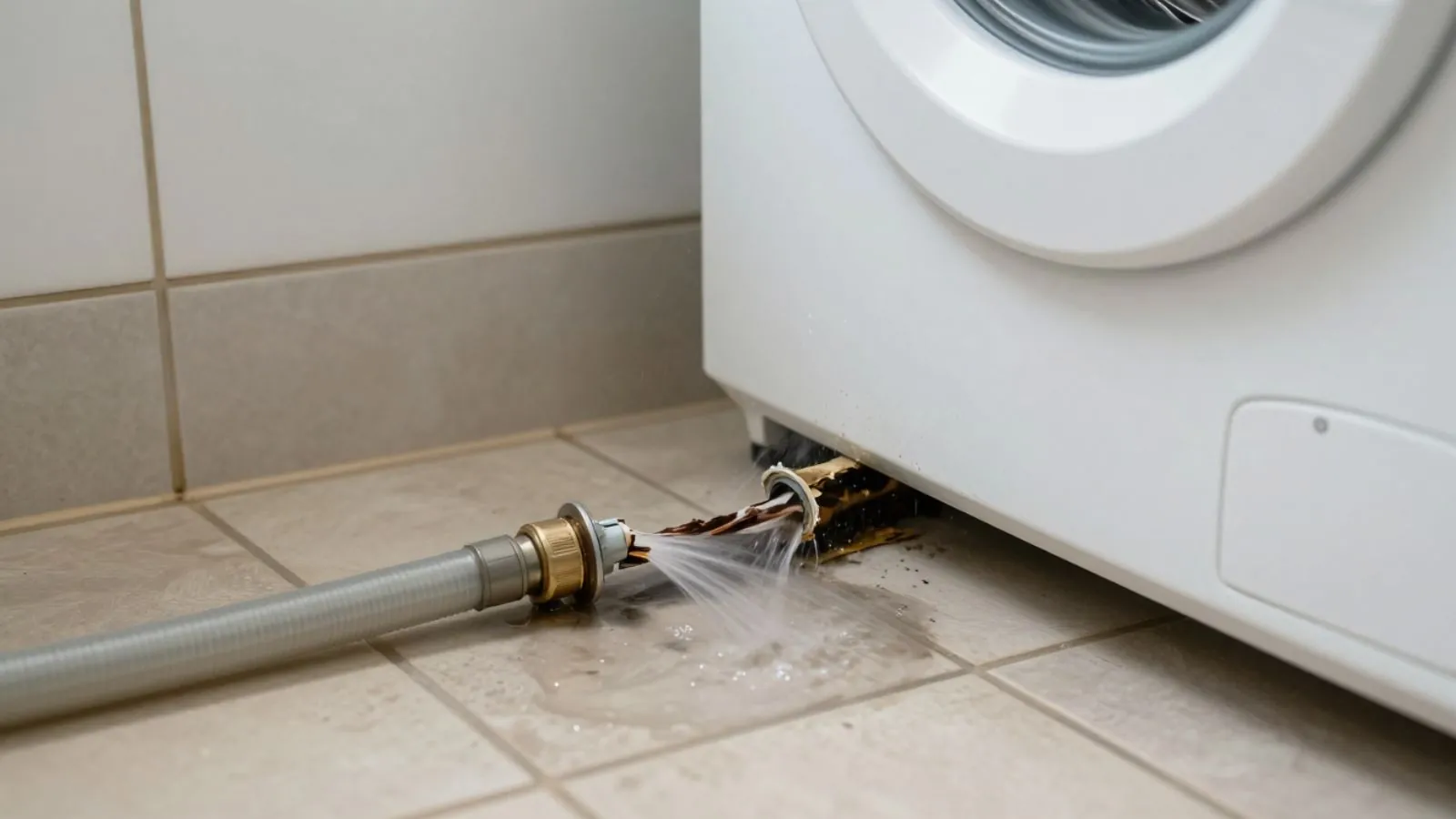
Appliance leaks tend to run quietly. A supply hose lets go behind a washer, an ice maker line drips behind a refrigerator or a dishwasher seal fails under the kitchen floor. The water spreads under finished flooring and into cabinets before anyone sees it. If an appliance has just flooded a room, call (833) 521-1033. The 24/7 line starts the response.
Appliance flooding the floor
Close the shutoff valve at the wall behind the appliance if you can reach it safely. If you cannot, shut off the main water valve. Unplug the unit only when the floor around the outlet is dry. If water is near the plug, cut the circuit at the panel from dry ground or call the utility.
Pull the appliance away from the wall only if it is safe, since a full washer or a wet floor makes that a hazard. Lift rugs and electronics off the floor. Take photos of the hose, the valve and the floor before cleanup starts.
Common appliance sources
Washing machine supply line
A rubber hose can burst under constant pressure, and a hose left on all day can release water continuously.
Dishwasher
A failed door seal, inlet valve or drain hose can leak under flooring and into the cabinet base.
Refrigerator ice maker line
A small tube behind the unit can pinhole and drip for weeks, often rotting the floor beneath.
Other appliances
Humidifiers, utility sinks and water softeners can also release water into a room.
Washing machine hoses are a frequent cause, and braided stainless hoses are a common replacement. A plumber or appliance technician fixes the appliance and the line. We handle the water damage that follows.
Water from a supply hose is clean at first, which is Category 1. Water that sat in a drip pan, mixed with detergent or drained from a machine can be Category 2, and a crew treats it with more care. If a dishwasher or washer drain backed up, the water may be dirtier than it looks.
| Appliance | Where water usually goes | What a crew checks |
|---|---|---|
| Washer | Laundry floor, adjacent walls, rooms below | Subfloor, baseboards, ceiling beneath |
| Dishwasher | Cabinet base, kitchen floor, crawl space below | Toe kick, flooring seams, cabinet bottoms |
| Refrigerator | Under flooring behind the unit | Floor edges, cabinet bases, moisture readings |
| Water softener or sink | Utility room floor and walls | Drywall base, slab, stored items |
Appliance water spreading?
A crew can extract and set up drying equipment.
Cleanup and drying after an appliance leak
A crew extracts standing water, then maps moisture with a meter and thermal camera, because hidden water under flooring and behind cabinet bases is the norm. Hardwood and laminate may be lifted at an edge so air can reach the subfloor. Wet pad and insulation are removed, and air movers and dehumidifiers run until readings are dry.
Kitchens add cabinets to the plan, and the kitchen water damage page explains what a crew does with toe kicks and cabinet bases. Floors have their own pages for hardwood and carpet. A refrigerator or washer leak that reached a lower floor is covered under ceiling water damage.
Safety before cleanup
Unplug the appliance only from dry ground. Shut off the supply valve. Stay off wet floors near outlets. Keep children and pets out of the room until the water is removed.
Extraction and drying after an appliance leak follow ANSI/IICRC S500, the standard that defines how wet buildings are dried, and the same standard explains why gray water is handled with more care than clean supply water.
Costs and insurance
How long the leak ran
A short burst and a slow drip over weeks have different results.
Flooring type
Tile, hardwood, laminate and carpet each dry or fail differently.
Cabinet and wall involvement
Water that reached cabinets and walls widens the scope.
Drying days
Hidden moisture often extends drying time.
Rebuild scope
Flooring, trim and paint are priced apart from drying.
Insurers often treat a sudden hose failure differently from a leak that has dripped for a long time, and the appliance itself is usually not covered. Photograph the source, keep the failed part if you can and keep receipts. We cannot promise coverage. For a plain explanation of scope and price before work starts, call (833) 521-1033.
Appliance leak calls arrive from New Canaan, Darien, Norwalk, Wilton and Stamford, and dispatch confirms Westport, Weston and Greenwich addresses by phone.
Common questions
Do you handle appliance leak emergencies at night or on weekends in New Canaan?
Yes. The line is answered 24/7. Call (833) 521-1033, say which appliance leaked and whether the water is off, and a crew is arranged.
Does a washing machine leak need professional drying?
If the water reached beyond the laundry floor or sat for more than a day, yes. Hidden moisture in walls and subfloor can cause mold if it is not dried.
How can I tell if my ice maker line is leaking?
Look for damp flooring or a musty smell behind the refrigerator, or a floor that feels soft near it. A moisture meter confirms what is hidden.
Will the cost of a new appliance be covered?
Usually the appliance is not covered, but the water damage to the home may be. Read your policy and ask your insurer.