
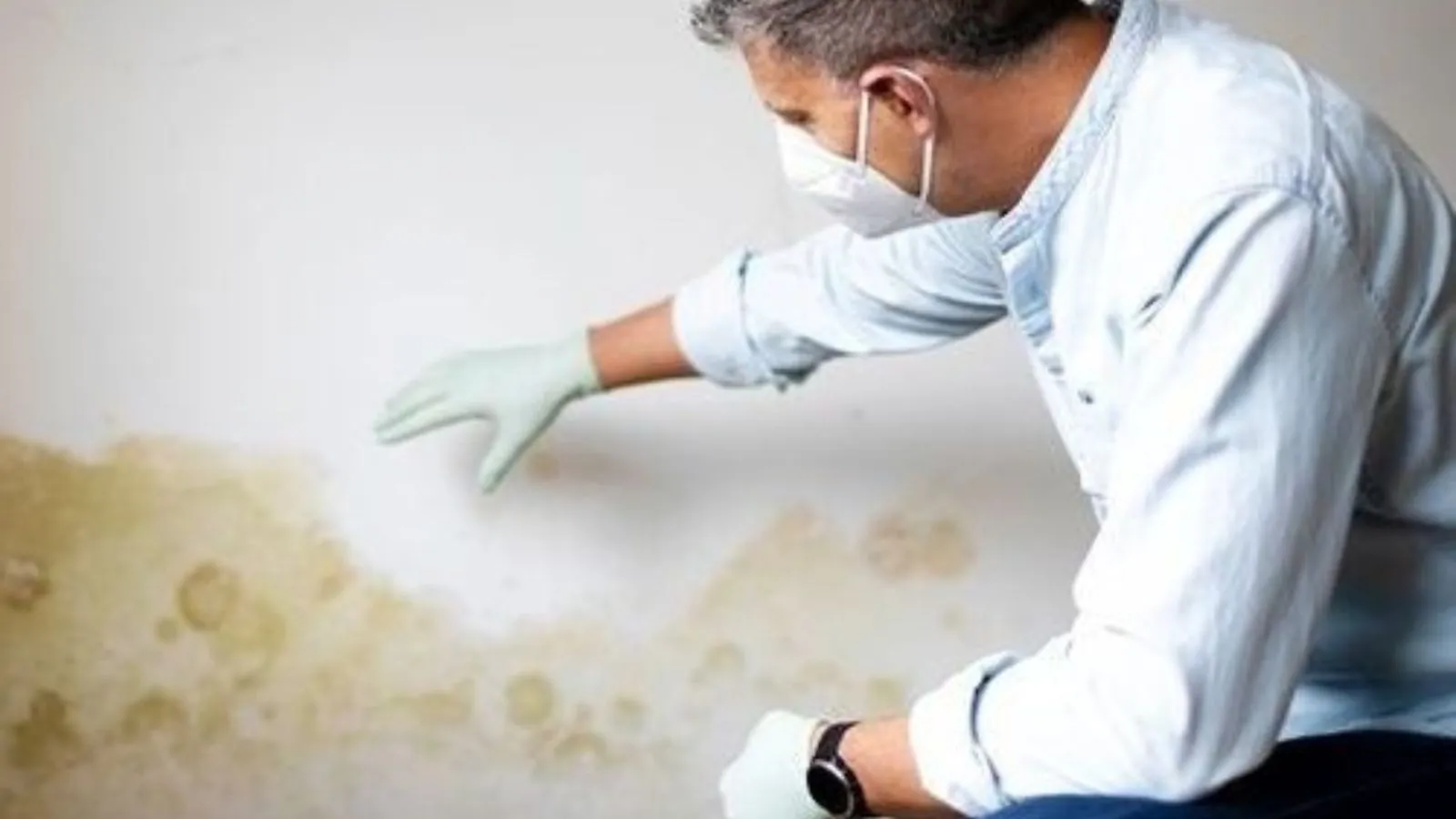
Drywall is paper-faced gypsum, and paper is food for mold once it stays wet. A wall can be damaged by a pipe inside it, a leak above, a window or siding issue or water that wicked up from a floor. Call (833) 521-1033 if a wall is soft, stained or bubbling.
Soft, bubbling or stained walls
A brown ring means water has moved through. Bubbling paint, a bulge in the surface or a soft spot when pressed means the board is holding water. Peeling tape at seams and a musty smell are other signs.
Do not paint over a wet wall. Paint traps moisture and hides the problem. A moisture meter reads the wall first, and a thermal camera shows where the water travels inside it.
| Sign | Meaning | Likely action |
|---|---|---|
| Stain only, dry reading | Past leak | Seal and repaint |
| Stain and damp reading | Active or recent leak | Find source, dry |
| Bulge or soft board | Saturated drywall | Cut out and replace |
| Musty smell, no visible stain | Hidden moisture | Open a small area and check |
When drywall can be dried and when it must go
Clean water caught quickly may dry in place. Drywall that has been wet for days, swollen or turned soft usually has to be cut out. Contaminated water means replacement of porous drywall, and insulation behind a wet wall is often removed.
A crew may drill small holes at the base or remove a baseboard so air reaches the cavity. Drying equipment runs and readings drop to dry standard before the wall is closed. For pipe-related causes see burst pipe and frozen pipe, and for water from above see ceiling water damage.
Wall damp?
Call for a moisture check and drying.
Repair and finish
After drying, new drywall is cut in, taped, mudded, sanded and primed. A stain-blocking primer stops old marks from bleeding through. Texture and paint are matched to the room. In older homes, plaster walls are repaired differently, and a plasterer may be better suited.
Baseboards and trim often need replacement when they were wet, covered under the water-related notes on hardwood and carpet pages.
Where wall water comes from
Walls get wet from inside and outside. Inside, a supply line or drain in the cavity can leak for a long time before the surface shows anything. Outside, a failed window flashing, a gap in siding or a clogged gutter can send rain down the wall framing. Water also climbs from the floor, which is why baseboards and the bottom of the wall are the first to show a problem.
Bathrooms, kitchens and laundry rooms have the most plumbing in the walls, so stains near them deserve a quick look. A stain in the middle of a wall, away from any fixture, often points to a pipe or to water traveling down from above. A stain under a window usually points to the window itself.
Insulation matters here. Fiberglass batts lose their value when wet and hold water against studs, and spray foam behaves differently. A crew opens a small area to see what is inside before deciding how much to remove, so the repair is only as big as the damage requires.
Electrical outlets and switches in a wet wall are a safety issue. If a wall is wet near them, leave the circuit off until an electrician has checked it.
Wet wall safety
Turn off the circuit for any outlet or switch on a wet wall, from a dry panel. Do not poke a bulging wall near wiring. Keep a bucket under drips. Do not paint over a wet wall.
Costs and insurance
Wall area wet
A patch and a whole wall are different scopes.
Insulation and cavity
Wet insulation adds removal.
Water category
Contaminated water means removal.
Drying time
Cavities dry slowly.
Finish work
Texture, paint and trim are priced separately.
Sudden leaks are often covered, and long-term seepage may not be. Photograph and keep receipts. We cannot promise coverage. Call (833) 521-1033 for the scope and price in plain terms before any wall is opened.
Wall damage calls come from New Canaan, Darien, Norwalk, Wilton and Stamford, and dispatch confirms Westport, Weston, Greenwich, Ridgefield and Redding addresses.
Common questions
Can I paint over a water stain?
Only after the wall is confirmed dry and the source is fixed. Use a stain-blocking primer.
How do I know if the wall is still wet?
A moisture meter reading, plus a thermal camera scan. Feeling the wall is not reliable.
Does all wet drywall need to be replaced?
No. Clean water caught early can dry in place. A moisture check decides.
What about walls in an older home?
Plaster is repaired differently from drywall, and a plasterer may be a better fit for finish work.