
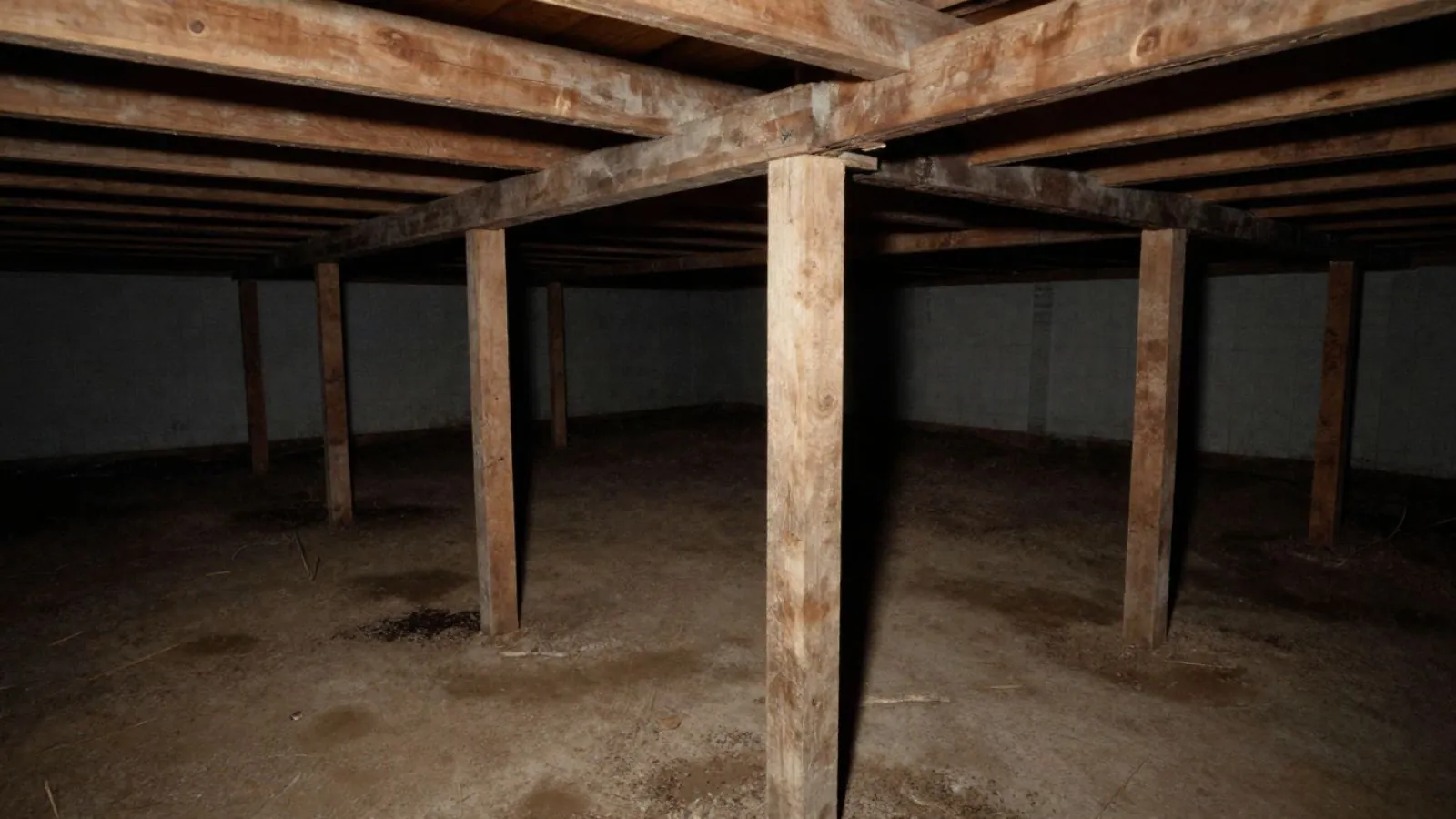
A crawl space is easy to ignore because nobody goes in it. Water can still collect there from a pipe, a plumbing drain, groundwater or a failed vapor barrier. The damage shows up elsewhere, as cold or soft floors, a musty smell in the rooms above or damp insulation hanging from the joists. Call (833) 521-1033 if you can see water or suspect it.
How water gets into a crawl space
Plumbing leak
A supply or drain line under the floor can drip into the space for a long time.
Groundwater and rain
Heavy rain and poor grading can push water through the foundation or vents.
Condensation
Warm humid air meeting cool surfaces can wet insulation and framing.
Failed vapor barrier
A torn or missing ground cover lets soil moisture rise into the space.
Connecticut has a mix of wet seasons, and a crawl space has no natural way to dry quickly. Moisture from soil rises, and unconditioned air carries more. The cleanup depends on the source, so a crew starts by finding where the water came from.
What a crew does under the house
Crews wear protective gear and use pumps for standing water. Wet insulation that has fallen or soaked is removed, since it holds moisture against the floor framing. A moisture meter checks joists and subfloor for wetness.
Air movers and dehumidifiers dry the space, and the vapor barrier is inspected. If wood is dark or fuzzy, the mold remediation page explains testing and containment. A plumbing source goes to a plumber, while the water damage is ours.
| Source | Sign upstairs | First step |
|---|---|---|
| Plumbing leak | Soft or stained floor, high bill | Shut off water, call plumber and us |
| Groundwater | Musty smell after rain | Extraction, check drainage |
| Condensation | Damp insulation, rusty nails | Drying, vapor barrier check |
| Torn vapor barrier | Earthy smell, damp air | Repair barrier, dry space |
Crawl space wet?
Call for a moisture check and a drying plan.
Floors above a wet crawl space
Moisture from below can cup hardwood, loosen adhesive and make carpet pad damp. Our hardwood floor page explains how wood reacts, and carpet covers pad. Sometimes the floor needs to be lifted so the subfloor can dry.
A wet crawl space can also feed humidity into the house. If a basement shows similar signs, the basement water damage page covers lower-level moisture.
Older homes and crawl spaces in New Canaan
The town has a large number of homes built across several centuries, and many of them sit on stone, block or poured foundations with partial crawl spaces or low basements. Some have dirt floors, old vents and plumbing that has been altered over decades. Those details change how moisture behaves under the house.
Vents that let in humid summer air can wet cool surfaces, while closed vents in winter trap moisture. Gutters that dump water next to the foundation or soil that slopes toward the house push water toward the crawl space. A plumber and a landscaper may be part of the fix alongside the drying.
Wires, ducts and pipes run through crawl spaces, so a crew works carefully and notes anything that looks damaged. If you find a damp spot on the floor above or a musty odor in one room, point it out. That helps a technician decide where to start.
Sealing and insulating the space is an option after drying, but it should be decided with a contractor who looks at the whole house. We handle the water damage, and other trades handle structural or grading work.
Before anyone goes under the house
Do not enter a crawl space with standing water near wiring. Watch for low beams, loose insulation and pests. Wear gloves and a mask rated for fine particles if you must look in. Otherwise, leave it to a crew.
Drying a crawl space follows ANSI/IICRC S500, the written standard for water loss work, and mold found there is handled under S520.
Costs and insurance
Source of the water
A pipe leak and groundwater need different fixes.
Access and size
Tight or deep spaces take more crew time.
Insulation and framing
Wet insulation and joists change the scope.
Drying time
Crawl spaces dry slowly without good airflow.
Follow-up work
Vapor barrier repair and drainage are separate from drying.
Insurance often treats sudden pipe failures differently from groundwater seepage, and flood is usually excluded from homeowners coverage. Ask your insurer and keep records. We provide readings and a written scope, and we cannot promise approval. Call (833) 521-1033 and the scope and price are explained before anyone goes under the house.
Crawl space calls reach us from New Canaan, Darien, Norwalk, Wilton and Stamford. For Westport, Weston, Greenwich, Ridgefield and Redding, the dispatcher confirms by address.
Common questions
Can I dry a crawl space myself?
A fan does not remove enough moisture from soil and framing. Professional dehumidifiers and meter readings are better, and the source must be fixed first.
What does a musty smell upstairs mean?
It can mean moisture in the crawl space or in the floor system. A moisture check finds where it comes from.
Should I remove wet insulation?
Usually yes. Wet insulation holds water against framing and can lose its value. A crew replaces it after the space is dry.
Does a crawl space need a vapor barrier?
A ground vapor barrier slows moisture rising from soil. A crew checks it and recommends repair if it is torn or missing.