
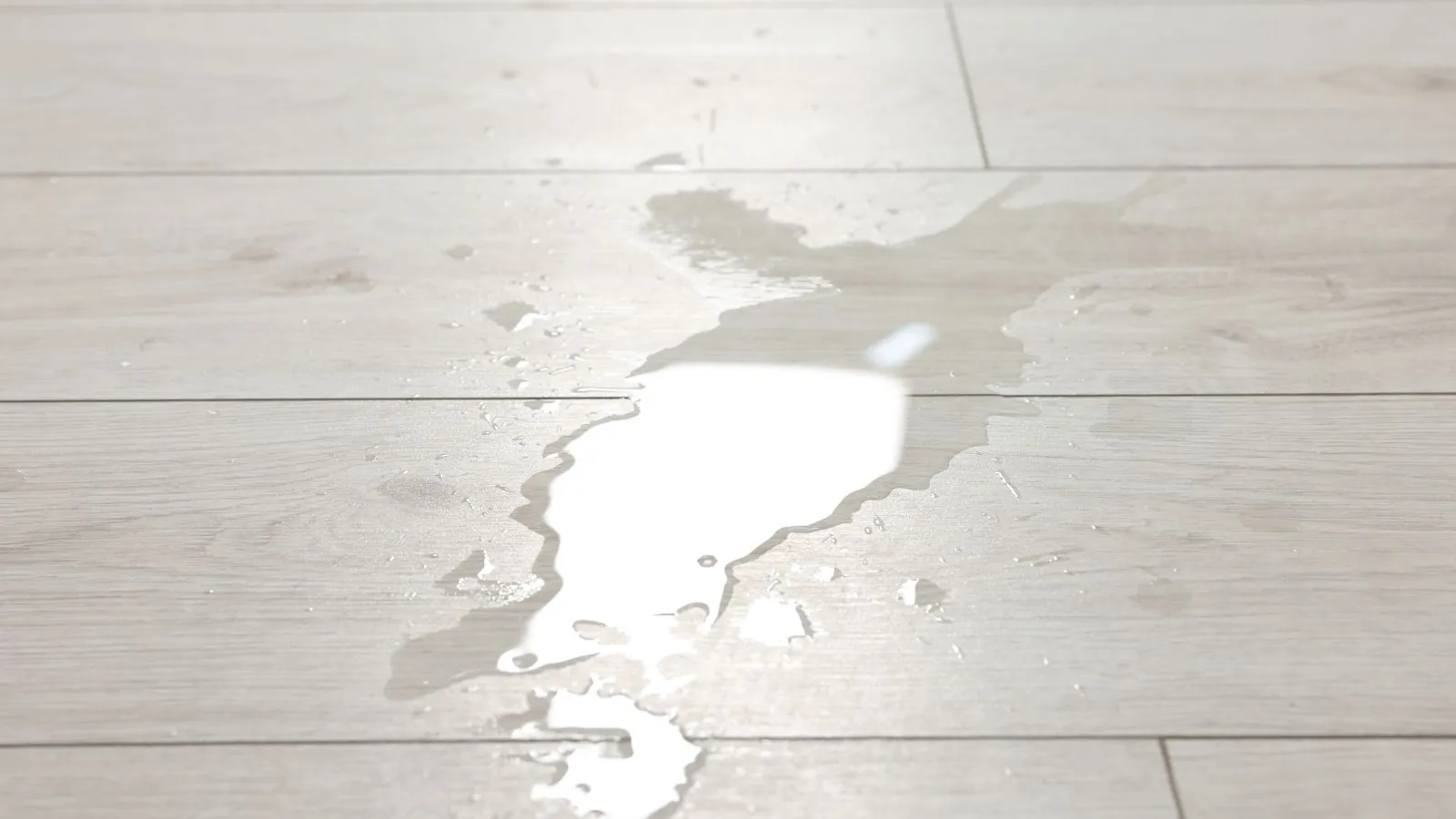
Kitchens have a supply line at the sink, a drain, a dishwasher, often a refrigerator ice maker and sometimes a disposal. Any of them can leak into the cabinet base or under the floor. The damage is typically hidden at first, then shows as swollen cabinet bottoms, soft flooring or a musty smell. Call (833) 521-1033 if you see it.
Water under the sink
A drip under the sink soaks the cabinet floor, then wicks into the wall behind. A loose trap, a cracked supply line, a failed disposal seal or a leaking faucet connection are the common sources. Empty the cabinet, shut off the valve and look for damp particleboard.
Particleboard swells when wet and does not return to shape. A cabinet base that has swollen is usually replaced, while solid wood cabinets may dry and stay. A crew checks each case with a meter.
Sink and disposal
Supply connections, traps and seals can leak into the cabinet floor.
Dishwasher
Door seals, inlet valves and hoses can leak under the toe kick.
Refrigerator line
A small ice maker line can drip behind the unit for weeks.
Supply lines in walls
Pipes behind a backsplash or in a wall can leak into the cavity.
What a kitchen cleanup involves
The crew removes wet items from the cabinet, extracts water and checks the cabinet base, wall and floor with meters. Toe kicks are removed to let air reach the space below. Air movers and dehumidifiers dry the area. Cabinet bases that cannot be dried are replaced.
Floor type matters. Tile is resilient but the subfloor under it may be wet, hardwood can cup and carpet pad needs to be checked. The source may be an appliance leak, and a pipe in the wall follows burst pipe notes.
| Source | What gets wet | Common outcome |
|---|---|---|
| Sink supply or trap | Cabinet floor, back wall | Dry or replace cabinet base |
| Dishwasher | Toe kick, subfloor | Lift flooring edge, dry subfloor |
| Refrigerator line | Floor edge and subfloor | Dry or replace flooring |
| Wall pipe | Cavity and drywall | Open wall, dry, repair |
Kitchen leak found?
Call to arrange a moisture check and a drying plan.
Hidden kitchen moisture
A kitchen hides water in many places. The back of a base cabinet, the space under a dishwasher, the wall behind a refrigerator and the cavity behind a backsplash can all stay wet for weeks. By the time a stain shows, mold may have started and the cabinet bottom may have softened.
Clues include a swelled toe kick, a cabinet door that no longer closes, a lifted edge of vinyl or laminate near an appliance, or a smell that returns after cleaning. A thermal camera shows the wet area through the surface and a meter gives a number to track.
Countertops are less often affected, but stone or laminate that sits on a wet cabinet may need to be lifted to replace a base. Plan for the cabinet maker or installer to be part of the project. A restoration crew can dry the area and remove damaged pieces, then you or your contractor handle the finish carpentry.
Safe first steps in a wet kitchen
Shut off the valve under the sink or the main. Unplug small appliances only from dry ground. Keep out of standing water near the range, the dishwasher and outlets. Empty the cabinet before it gets heavier.
Drying a kitchen follows ANSI/IICRC S500, the water damage restoration standard, including readings taken at cabinet bases and subfloor before anything is rebuilt.
Costs and insurance
Source and duration
A short leak and a slow drip behave differently.
Cabinet material
Particleboard and solid wood have different outcomes.
Flooring beneath
Tile, wood and vinyl each respond differently.
Drying days
Hidden moisture can extend drying.
Rebuild
Cabinets, trim and paint are separate from drying.
A sudden leak is often covered, while a long-term drip may be treated as maintenance. Ask your insurer, photograph the source and keep receipts. We provide readings and a written scope, and we cannot promise approval. Call (833) 521-1033 for a plain explanation of scope and price before cabinets are touched.
Kitchen leak calls come from New Canaan, Darien, Norwalk, Wilton and Stamford, and Westport, Weston and Greenwich addresses are confirmed by phone.
Common questions
Can I keep cabinets that got wet?
Solid wood often dries and stays. Particleboard that has swollen usually needs to be replaced. A meter reading decides.
How do I know if a kitchen leak went into the wall?
Staining at the wall base, a musty smell or soft drywall suggest it. A moisture meter confirms it.
Do I need to move out during drying?
Usually not. Equipment runs in the affected area, and you can use the rest of the house.
What if the leak came from the dishwasher?
The water often runs under the floor. A crew checks the toe kick and the subfloor.