
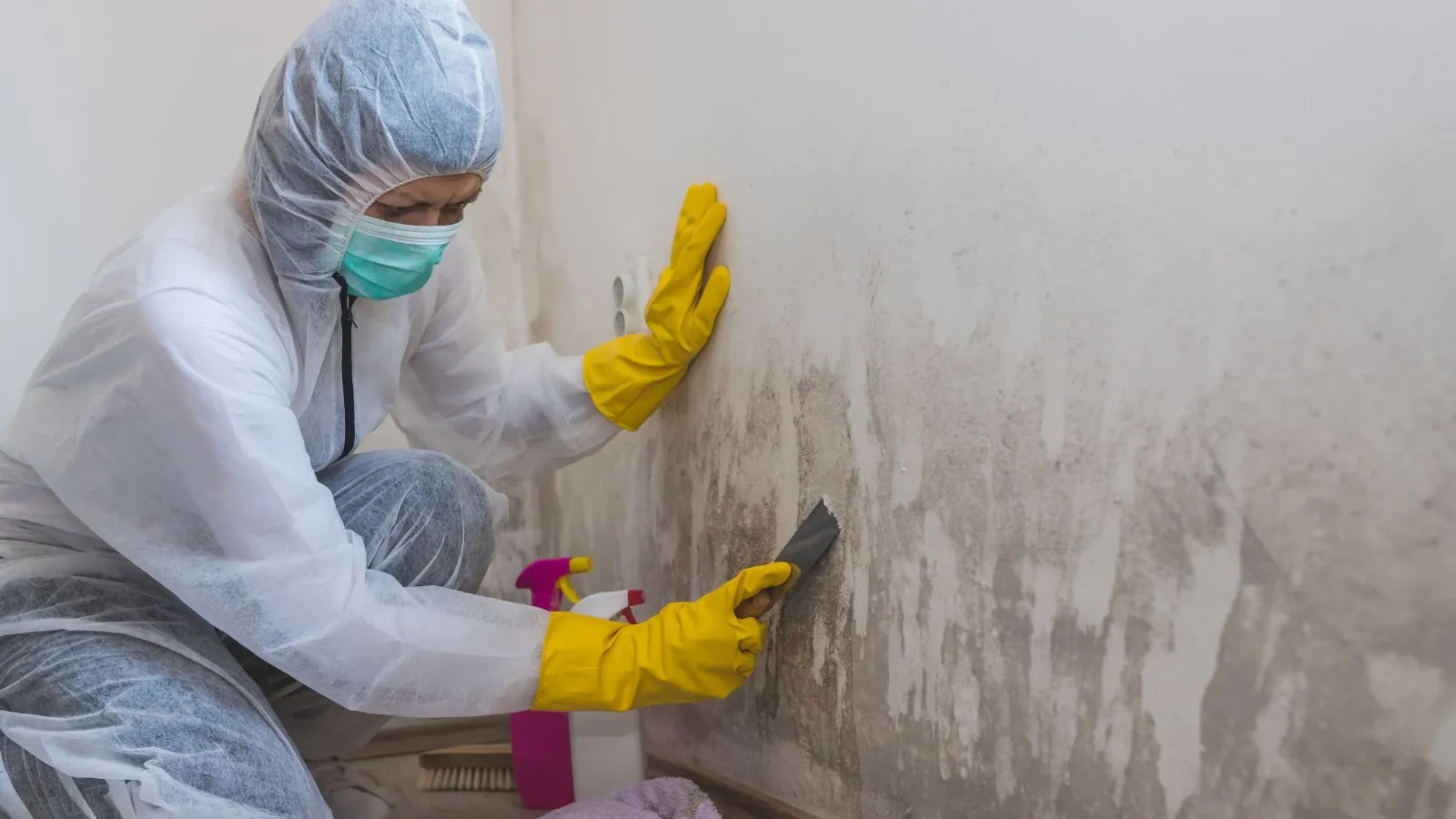
Mold grows where moisture lingers, usually in materials that stayed wet after a leak or flood. It also grows in damp attics and basements where humidity runs high. Remediation means removing the growth and the conditions that fed it. Call (833) 521-1033 to talk through what you are seeing.
Musty smell or dark spots on walls and ceilings
Most people notice mold as a smell before they see it. A musty odor in a closet, basement or room that was once wet is a common early sign. Dark spots on drywall, around windows or on a ceiling below a leak are another.
Not every dark spot is mold, and only testing can tell for sure. Do not scrub it dry or blast it with a fan, since that can spread spores. Keep the area closed and call for an inspection.
Fix the moisture first
Mold returns if the water source remains. A leak, a high humidity problem or a damp crawl space must be addressed before cleaning, or the growth will come back.
How remediation works
Find the source
Moisture meters and a thermal camera trace the water.
Contain
Plastic barriers and negative air limit spread to other rooms.
Remove
Affected porous materials are cut out and bagged, and hard surfaces are cleaned.
Dry and verify
Drying equipment runs, then post-work testing confirms the result.
The process follows the ANSI/IICRC S520 standard for mold remediation. A crew uses HEPA filtration and protective equipment. Testing before and after helps confirm the area is clear, and independent testing by a separate firm avoids a conflict of interest. Ask your contractor about it.
| Question | Answer |
|---|---|
| Can I clean small spots myself? | Small surface spots on hard materials may be cleaned with care, but a hidden or larger problem needs a professional |
| Does bleach solve it? | Bleach does not address moisture and does not remove growth from porous materials |
| Do I need testing? | Testing can confirm what is there and verify results after work |
| Will it come back? | Only if the moisture source remains |
Mold found?
Call to arrange an inspection and a plan.
Mold after a leak, flood or storm
Mold often follows water damage that was not dried in time. If a leak went on for weeks, see ceiling water damage, AC leak water damage or basement water damage. Wet carpet pad and drywall are the usual places, explained on carpet and wall and drywall pages.
Attics and crawl spaces can have mold without a leak, from condensation and poor ventilation. A crawl space water damage check looks at the source. Roof leaks are covered on the ceiling page.
Safe habits around suspected mold
Do not scrub or sand dry growth. Keep the area closed. Do not run fans toward it. Wear gloves and a fitted mask if you must enter, and keep children and pets out of the room.
Licensing, permits and insurance
Rules for mold work vary by state. Ask whether your state licenses mold work and request proof from any contractor you hire. Connecticut homeowners can check a contractor's license through the Department of Consumer Protection and should get a written estimate and avoid paying the full amount upfront.
Insurance for mold depends on the cause. Mold that follows a covered sudden leak may be covered, while mold from long-term moisture often is not. Read your policy and ask early.
Area affected
A small patch and a whole room are different jobs.
Materials
Drywall and insulation removal adds to scope.
Containment
Barriers and filtration take setup time.
Testing
Pre and post testing are separate from removal.
Rebuild
Replacing removed materials follows clearance.
We provide a written scope and cannot promise coverage. Call (833) 521-1033 to hear how scope and price are laid out before containment goes up. Mold calls come from New Canaan, Darien, Norwalk, Wilton and Stamford, with Westport, Weston, Greenwich, Ridgefield and Redding confirmed by phone.
Common questions
Why does my room smell musty?
A musty smell often means moisture in a wall, floor or ceiling. A moisture check finds where, and testing shows whether growth is present.
Are those dark spots on my ceiling mold?
They might be, or they might be a water stain or dirt. Only testing can say. Do not scrub dry, and keep the area closed.
Does my state license mold work?
Rules differ by state, so ask whether your state licenses mold work and ask any contractor for proof. In Connecticut you can check contractor licensing through the Department of Consumer Protection.
Is testing necessary after remediation?
Post-work testing helps confirm the area is clear. Independent testing by a separate firm avoids a conflict of interest.