
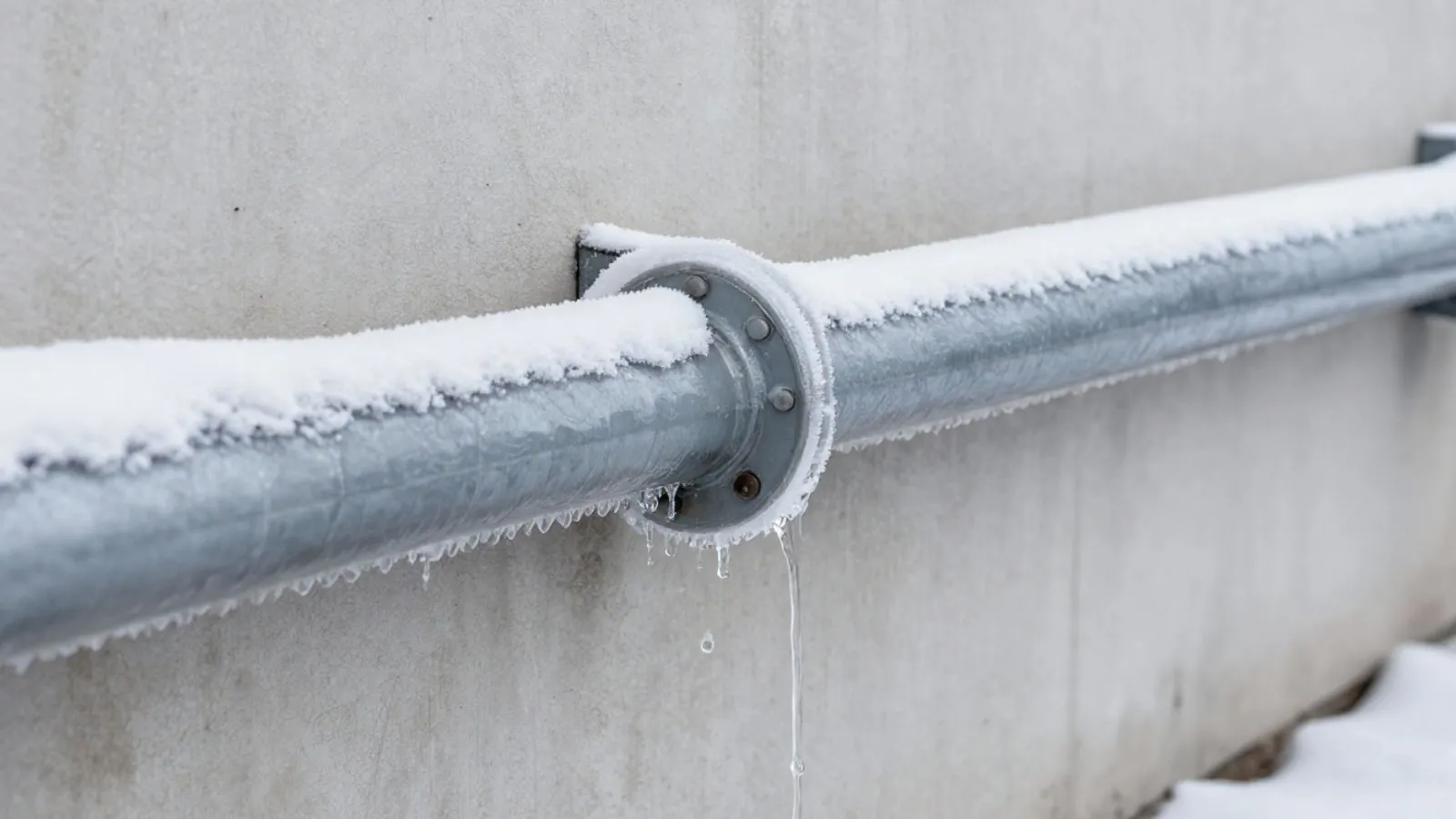
Frozen pipe water damage is a two-step event. Water inside a pipe turns to ice and expands, which can crack the pipe wall or split a joint. Nothing leaks while the ice holds. The flooding begins when the temperature rises and the ice melts, often hours after the freeze, and sometimes while nobody is home. If water is now showing at a wall, ceiling or floor, call (833) 521-1033 and the 24/7 line starts the response.
When a frozen pipe turns into a flood
If a pipe is frozen but not yet leaking, keep the heat on, open the faucet slightly and leave the thaw to a plumber if the pipe is out of sight. Do not use an open flame on a frozen pipe. If water has already appeared, shut off the main valve first, then open a faucet at the bottom level to drain the line.
Watch for sagging ceilings and wet insulation. A pipe that split in an attic or an outside wall can drop water into the rooms below without any visible drip until the damage is large. Stay clear of electrical hazards, and call 911 or the utility before you call us if water is near outlets or fixtures.
Why frozen pipes split
Water expands when it freezes, and the pressure builds in the section of pipe between the ice blockage and the closed faucet. The weak point gives way, and that point is often not where the ice formed. That is why a split can be in a spot that looks fine from the outside.
Pipes in exterior walls, unheated crawl spaces, garages and attics are the usual suspects, and so are pipes in a house that lost heat. Connecticut winters bring repeated freeze and thaw cycles. We do not publish a local frequency here because it varies by home, but the mechanism is the same everywhere: cold, an unprotected pipe and a thaw.
| Stage | What is happening | What to do |
|---|---|---|
| Frozen, no leak | Ice is holding, pipe may be cracked | Heat the space, open the faucet, call a plumber |
| Thawing, water appearing | Split is leaking under pressure | Shut off the main valve, call us |
| Water has spread | Wet insulation, ceiling or floor | Extraction, material check, drying |
Water coming through after a thaw?
Call dispatch for extraction and drying.
What the cleanup looks like
A crew shuts down the spread by confirming the water is off, then extracts standing water and checks wall cavities and ceilings with a thermal camera. Wet insulation is usually removed because it holds water against framing. Air movers and dehumidifiers then dry the structure, and meters are read each day.
Because frozen pipes usually run through walls and ceilings, wall and drywall repair and ceiling water damage are common follow-on work. If the freeze happened in a house that had lost power during a storm, read the notes under storm water damage.
In 2020 Tropical Storm Isaias left more than 85 percent of New Canaan without power at first. Outages like that matter in winter because a home with no heat can freeze quickly. If you leave town, ask a neighbor to check the house, and know where your main shutoff is.
Work after a freeze follows ANSI/IICRC S500, the industry standard for restoring water-damaged structures, including daily moisture readings until framing and finishes reach their dry targets.
Costs and insurance after a freeze
Location of the split
A pipe in an attic or wall opens more material than one in a basement.
How long it leaked
Water that ran overnight reaches more rooms than water caught quickly.
Insulation and finishes
Wet insulation and finished ceilings add removal and repair work.
Drying days
Walls that held water need longer drying and more readings.
Rebuild scope
Drywall, paint and trim are separate from the drying itself.
Sudden pipe freezes and splits are often covered, but policies can require that the home was kept heated, so read yours and call the insurer promptly. We photograph and log moisture readings to support a claim, and we cannot promise approval. For how scope and price are explained before work, call (833) 521-1033.
Our dispatch line takes freeze calls across New Canaan, Darien, Norwalk, Wilton and Stamford, along with Westport, Weston, Ridgefield, Redding and Greenwich on request.
Common questions
Do you handle frozen pipe emergencies at night or on weekends in New Canaan?
Yes. The line is answered 24/7 in every season. Call (833) 521-1033, say that a pipe froze and whether water is showing, and dispatch arranges a crew.
Should I thaw the pipe myself?
If the pipe is exposed and not leaking, gentle warmth from a hair dryer on low is the common advice. Never use an open flame. If the pipe is inside a wall or you cannot see it, call a plumber, because a cracked pipe will leak as it thaws.
How do I know a pipe is frozen and not just blocked?
No water from one faucet while others work, or a trickle, often points to ice, especially in a cold snap. Frost on an exposed pipe or a bulge are other signs. If you are unsure, call a plumber before the pipe thaws.
Will my insurance cover frozen pipe damage?
Frequently it does when the freeze was sudden, but some policies set conditions about heating or about leaving the house empty. Ask your insurer before you assume either way.