
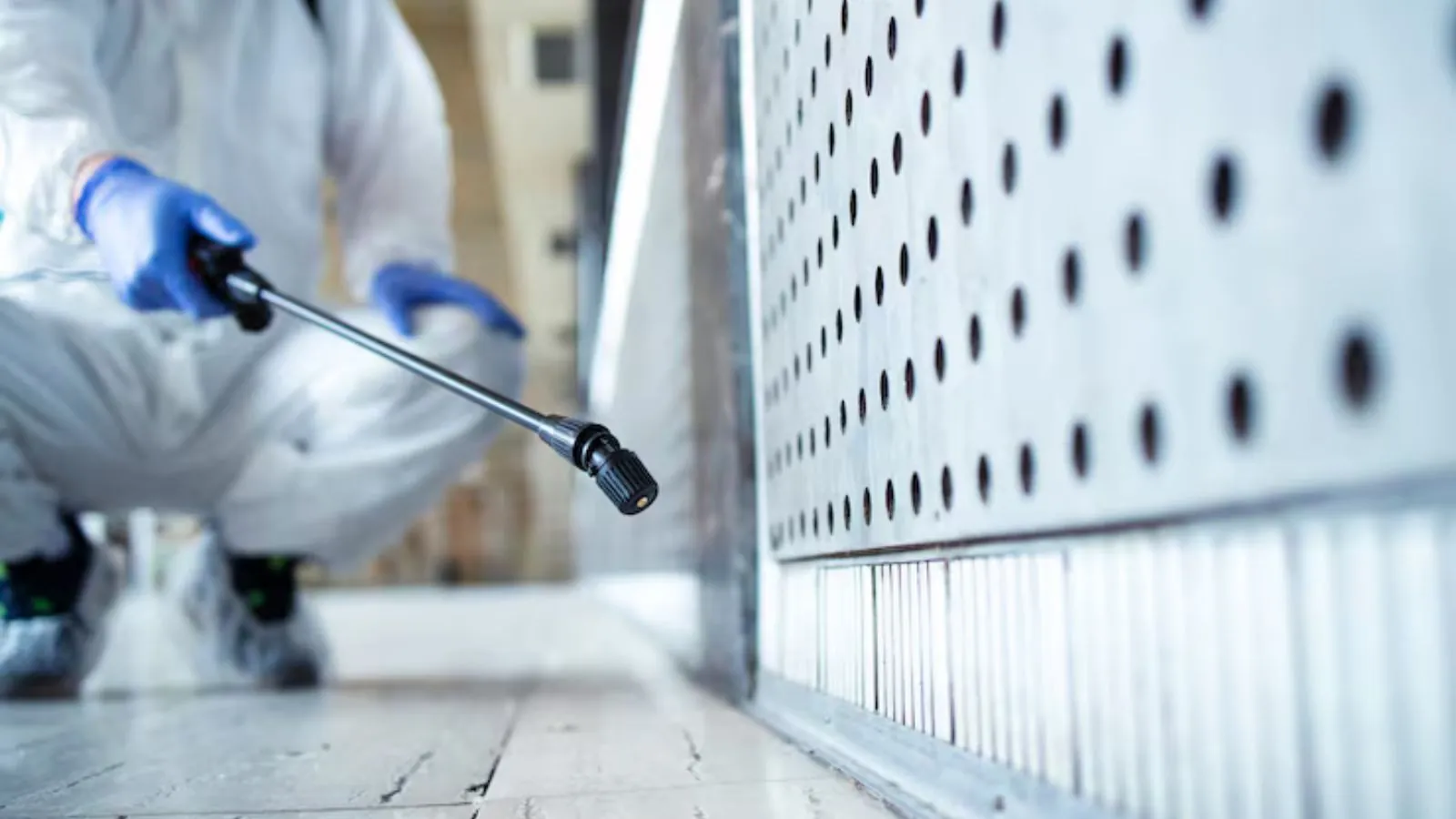
People use the phrase black mold for any dark growth on walls, ceilings or wood. Color does not identify what is growing, and only testing can say. What matters for removal is the same in every case: find the moisture, control the spread, remove affected material and confirm the result. A job that skips any of those steps tends to come back.
Why color is not a diagnosis
Mold comes in many colors, and dirt, soot and old water stains can look similar. Do not rely on appearance to decide how serious it is. Testing and an inspection by a qualified firm give a better answer. Avoid brushing or spraying a dry spot, because that can disturb it and spread spores into the room.
The process, in order
Find the water
A moisture meter and thermal camera trace the wetness that fed the growth.
Contain the area
Plastic barriers and negative air keep spores from moving to other rooms.
Remove material
Affected drywall, insulation and porous items are cut out and bagged.
Clean and verify
Surfaces are cleaned with HEPA vacuums, then testing confirms the result.
The method follows ANSI/IICRC S520, the published standard for mold remediation. It treats containment and moisture control as part of the job and not as extras. Our mold remediation page explains the process in more detail.
Why the moisture source comes first
Cleaning mold without fixing the water is like mopping while the faucet runs. A leak, a damp crawl space or high indoor humidity has to be addressed, or the growth returns. See AC leak water damage and crawl space water damage for common hidden sources.
| Question to ask a contractor | What a good answer includes |
|---|---|
| How will you find and fix the moisture? | Meters, a plan for the source and drying |
| How will you contain the work? | Barriers, negative air, HEPA filtration |
| Who does the post-work testing? | Ideally a separate firm for independence |
| Is mold work licensed in this state? | A clear answer and proof of any license |
| What is the written scope? | Areas, materials, steps and the final verification |
What not to do
- Do not scrub dry growth or use a fan to blow on it.
- Do not rely on bleach to treat porous materials such as drywall.
- Do not paint over it, because paint traps moisture.
- Do not hire anyone who will not explain how they will keep spores contained.
Water damage in progress?
Call the 24/7 line and describe what you see.
Testing before and after
Testing can mean air samples, surface samples or both. A before test helps define what is present and where. An after test, called clearance, checks that the area is back to a normal condition. Independent testing by a firm that does not do the removal avoids a conflict of interest, and it is worth the added step on larger jobs.
Be wary of any test that is used to scare you into a larger job. Ask what the results mean in plain words and ask what level the contractor treats as clear. A good firm will explain how it reads the results and will not make health claims it cannot support.
After the work
Once clearance is complete, the rebuild begins with new drywall, insulation and finishes. Keep humidity in check and keep an eye on the area for a few weeks. A new stain or odor means moisture is still present and the source needs another look.
Keep the paperwork. The written scope, the test results and the invoices are useful for a future buyer and for an insurer, and they show the work was done properly.
How long a removal job takes
A small contained job may be finished in a day or two, while larger jobs with removal of drywall and insulation, drying and clearance testing can run for a week or more. The schedule depends on the area, the materials and how long drying takes. Ask for a timeline in the written scope.
Expect some disruption. Plastic barriers go up, equipment runs and the work area is off limits. A careful crew keeps the rest of the house clean and tells you when the area is safe to reenter.
A New Canaan note
Older New Canaan homes often have crawl spaces, stone foundations and original plaster, all of which hold moisture in ways newer houses do not. If you own an older house in Smith Ridge or near Town Center, mention the age of the building so a technician can plan the inspection.
Rules for mold work vary by state, so ask whether your state licenses mold work and request proof. Connecticut homeowners can check contractor licensing through the Department of Consumer Protection.
A moisture problem that follows a leak is easier to deal with if the leak was dried properly. The structural drying page explains how that works.
Common questions
Is every dark spot black mold?
No. Dirt, soot and stains can look similar. Testing and inspection tell you what it is.
Can I remove mold from drywall myself?
A tiny surface spot on a hard surface can be cleaned with care. Growth on drywall or in a wall needs removal of the material, and hidden or larger areas call for a professional.
Does New Canaan require a permit for mold work?
It depends on whether the rebuild involves permitted work. Ask the Building Department or your contractor.
How do I know the job worked?
Post-work testing and a dry moisture reading confirm it. Ask for the results in writing.