
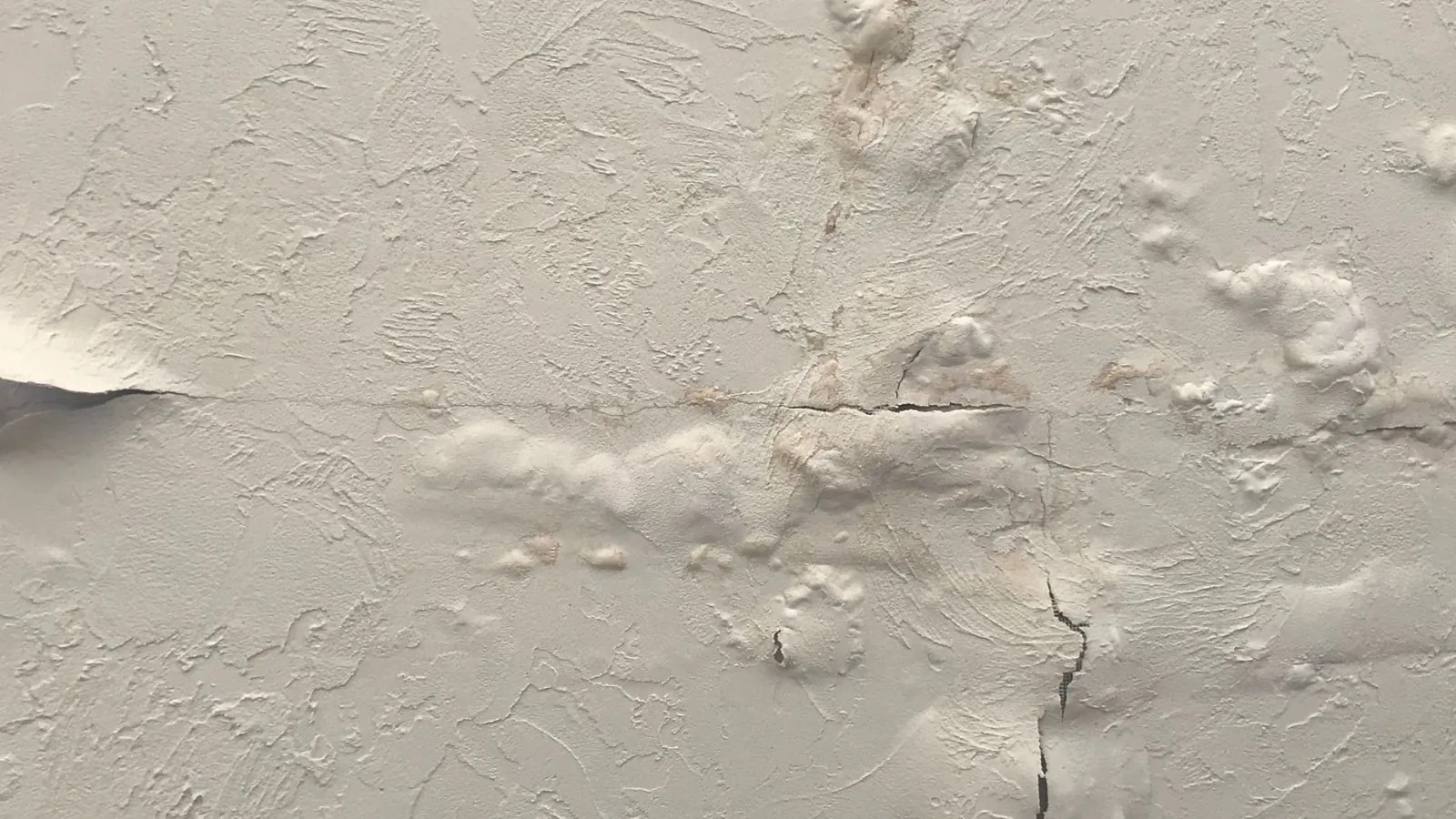
A house can look beautiful and still hide water damage. Fresh paint, new flooring and a staged basement can cover a lot. Buying a house is a large decision, so it makes sense to check for water damage systematically. This page lists what to look for, and when to bring in a professional with a moisture meter. It is general information and not a substitute for a licensed home inspection.
Start with the ceilings and walls
Look for stains, ripples, peeling paint and patches that are a different color from the rest. Check the ceiling below bathrooms and the walls under windows. Press gently on any suspicious area, and notice whether it is soft. A fresh patch in an odd place deserves a question.
Floors
Look for cupped or buckled boards, gaps, dark stains at seams and carpet that feels damp. Walk through the house and notice whether the floor feels uneven near plumbing walls or appliances. Floors that were recently refinished or replaced in only one room can mean a repair.
Basement and crawl space
- White chalky deposits on walls, called efflorescence, show past moisture movement.
- Rust at the base of the furnace, the water heater or the support posts suggests dampness.
- A dehumidifier running in the basement is a clue to ask about.
- A musty smell is worth investigating, even if the basement looks clean.
- Look for a sump pump and ask when it last ran.
Our basement water damage and crawl space water damage pages explain what these signs can mean.
Roof, attic and windows
From outside, look for missing shingles, sagging, moss and failed flashing. In the attic, look for dark stains on the decking and damp insulation. Around windows, look for stains on the sills and peeling paint, which can show a leak.
| What you see | What it can mean | What to ask |
|---|---|---|
| New paint on one ceiling patch | Past leak | What happened and when, and who repaired it |
| Cupped hardwood near a wall | Moisture from below or a past leak | Records and a moisture reading |
| White deposits on basement walls | Moisture movement | History of water in the basement |
| Musty smell in a closet | Damp wall or poor airflow | Moisture check |
| Stained attic decking | Roof leak or condensation | Roof age and repair history |
Water damage in progress?
Call the 24/7 line and describe what you see.
Questions for the seller and the inspector
Ask the seller about any past leaks, floods and repairs, and ask for records. Ask your inspector whether the house warrants a moisture meter reading and a thermal camera scan, and whether a specialist should look at the crawl space or the roof. Ask your attorney and agent about what the seller has to tell you.
Plumbing, appliances and HVAC
Run the water at each sink and tub and look underneath for damp cabinet floors and rust on valves. Flush each toilet and watch the base for seepage. Look at the water heater for rust, scale and moisture on the floor beneath it. Check the washer hoses and the refrigerator line if you can reach them.
Look at the air handler and the condensate line, since those leak more often than people realize. A rusted pan or stained insulation near the unit is a clue. Ask when the HVAC was last serviced and whether the condensate line has been cleared.
Note the age of the plumbing. Older supply lines can pinhole, and some materials have known failure patterns. A plumber can tell you what you have and what to watch.
After you move in
Once you own the house, learn where the main shutoff is and test it. Check the sump pump, clean the gutters and walk the basement after the first heavy rain. A new owner who watches the house for the first year learns where it is weak.
Keep the inspection report and any seller records in a folder. They are useful when you insure, repair or sell the house later, and they show what was known at the time of purchase.
A New Canaan note
New Canaan has many older houses, and some have stone foundations, crawl spaces and plaster walls. Those features are not defects, but they hold moisture differently from new construction. A house in the Historic District near Town Center or an older home in Smith Ridge may deserve a more careful look at the foundation and plumbing.
Check the FEMA flood map for the address at msc.fema.gov, and ask your insurance agent about flood coverage before you close. FEMA proposed updated flood hazard determinations for the town in 2024. Connecticut's insurance department notes that flood is excluded from standard homeowners policies.
When to bring in a specialist
A home inspector gives a broad overview. If you see stains, smell musty air or hear that the house had a leak, a restoration or moisture specialist can take readings. A specialist can tell you whether materials are wet now, which is different from knowing they were wet once. If the readings are high, ask the seller to address the source and dry the area before you close.
Common questions
Can a home inspector find hidden water damage?
Often, using a moisture meter and visual checks. A specialist can add a thermal camera or other testing if something looks off.
Is a stain on the ceiling always a current leak?
No. It may be old. A moisture reading tells you whether it is wet now.
Should I check the flood map before buying in New Canaan?
Yes. Look up the address at msc.fema.gov and ask your agent about flood insurance before closing.
What if I find mold during a showing?
Do not disturb it. Tell your agent and inspector, and ask for testing and the seller's records.