
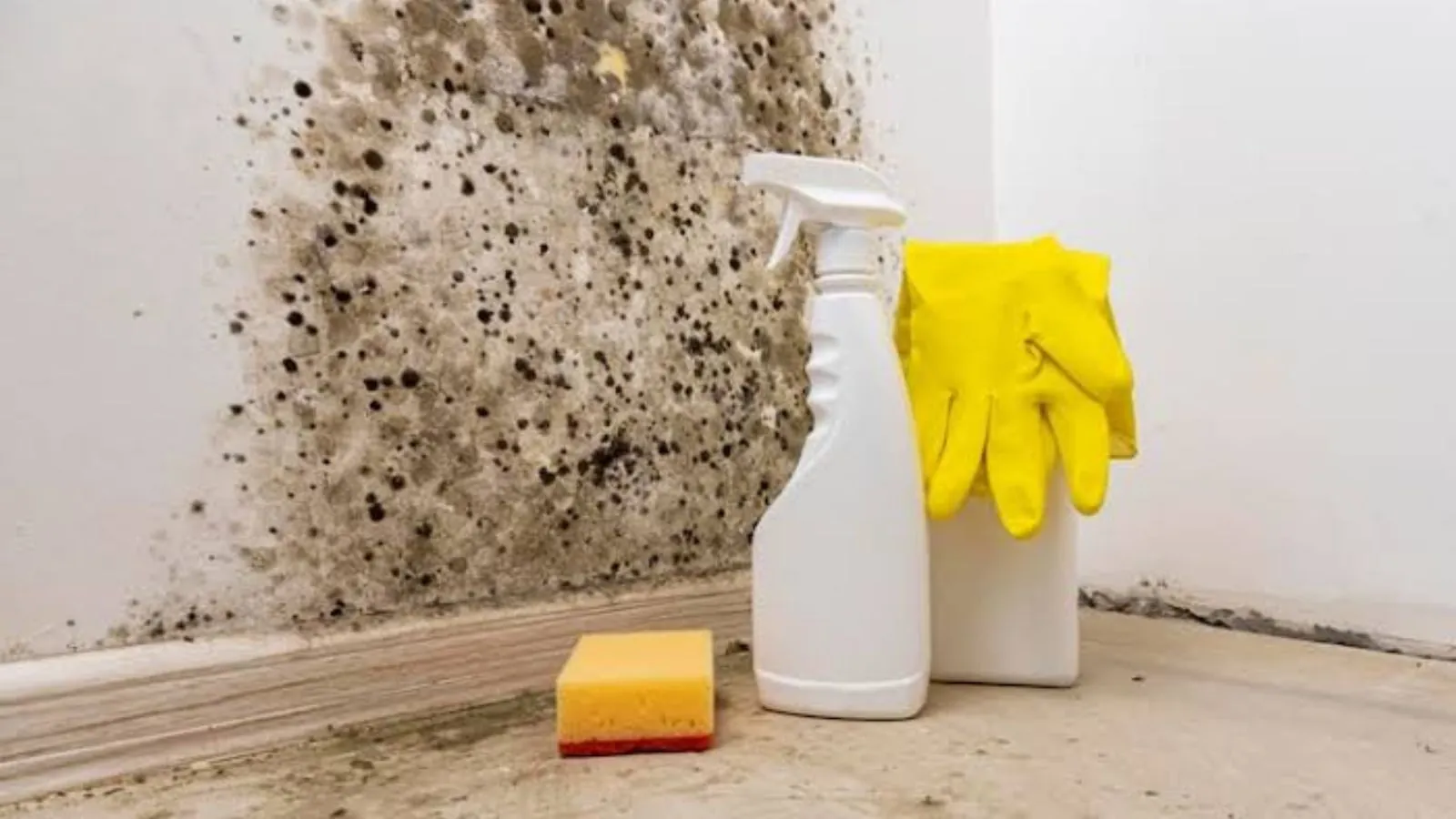
Mold grows where moisture lasts long enough, and getting rid of it means removing both the growth and the conditions that fed it. A homeowner can handle a small surface spot on a hard material. A larger area, growth inside walls or anything that follows a flood needs more care.
Step one is always the moisture
Look for the water source before you look for a cleaner. A leaking pipe, a roof leak, condensation on a cold wall or a damp basement are the usual causes. If you do not stop the source, the mold returns. A moisture meter can tell you whether a wall is still wet, and that is more reliable than touch.
When a small spot can be handled
A small patch on a tile, glass or painted hard surface can be wiped with detergent and water, then dried completely. Wear gloves and a well-fitting mask, ventilate the room and keep the area closed to others while you work. Discard the cloths in a bag.
Porous materials are different. Mold grows into drywall, ceiling tile, carpet and insulation, and surface cleaning does not remove it. Those materials are usually cut out and replaced.
| Situation | Reasonable approach | When to call a professional |
|---|---|---|
| Small spot on tile or glass | Wipe with detergent and dry | If it returns quickly |
| Spot on painted drywall | Check for moisture behind it | If the wall is damp or the spot is spreading |
| Musty smell with no visible growth | Look for leaks and humidity | If you cannot find the source |
| Growth after a flood or leak | Do not disturb it | Always |
| Larger areas, ceilings or attics | Keep the room closed | Yes, containment is needed |
Control humidity
Indoor humidity that stays high encourages growth. Run exhaust fans in bathrooms and kitchens, fix gutters that dump water at the foundation and keep a dehumidifier in a damp basement. A simple hygrometer shows the level in a room. Keep it in a range that stays comfortable and dry.
What does not work
- Painting over growth, which traps moisture.
- Bleach on porous materials, which does not remove growth inside them.
- Fans blowing on an active patch, which spread spores.
- Fogging products used alone, because they do not fix the moisture.
Water damage in progress?
Call the 24/7 line and describe what you see.
Different rooms, different problems
Bathrooms grow mold from steam and splashes, so the fix is better ventilation and keeping grout and caulk in good shape. Basements grow it from damp air and wet walls, so the fix is dehumidification and drainage. Closets on exterior walls grow it from cold surfaces and trapped air, so the fix is airflow and sometimes insulation.
Windows grow it from condensation that sits on frames and sills. Wipe the water off, improve airflow and check the seal. Attics and crawl spaces have their own causes, covered in the crawl space water damage page.
What a professional adds
A professional brings meters, a thermal camera, containment and filtration. The tools show where moisture is and keep spores from spreading to clean rooms. They also bring a written scope, which is useful for any insurance conversation.
If you hire one, ask how the source will be fixed, how the area will be contained and how the result will be verified. Ask whether your state licenses mold work. A good contractor answers all three without hesitation.
Safety while you work
If you clean a small area, wear gloves, eye protection and a fitted respirator rated for fine particles. Keep children, pets and anyone with breathing concerns out of the room. Work slowly so you do not stir up dust, and bag waste before carrying it through the house.
Stop if the area is larger than you expected, if it keeps coming back or if the material is crumbling. Those are signs the problem is bigger than a surface spot, and a professional assessment is the safer next step.
A New Canaan note
Heavy rain in the area, such as the remnants of Hurricane Ida in 2021, left some New Canaan basements wet that had never been wet before. A basement that stays damp for days can grow mold in carpet, stored boxes and the base of walls. Dry it fast, and read the basement water damage page for the steps.
Homes near Silvermine and other low ground may see damp conditions more often, and Talmadge Hill homes that sit empty during the day benefit from a leak sensor.
If the problem is larger than a small spot, the mold remediation page explains containment, removal and testing. Ask whether your state licenses mold work and request proof from any contractor.
Common questions
Can bleach get rid of mold?
Bleach can lighten surface stains on hard materials but does not address moisture and does not remove growth from porous materials.
How do I stop mold from coming back?
Fix the moisture source, dry the area fully and control humidity with ventilation and a dehumidifier.
Is a musty smell always mold?
Not always, but it points to moisture. Look for a leak or damp spot, and have a moisture check if you cannot find it.
Why did mold grow in my New Canaan basement after heavy rain?
Rain can raise groundwater and push water through foundation walls. Damp carpet and boxes then grow mold if they stay wet. Dry the space quickly.