
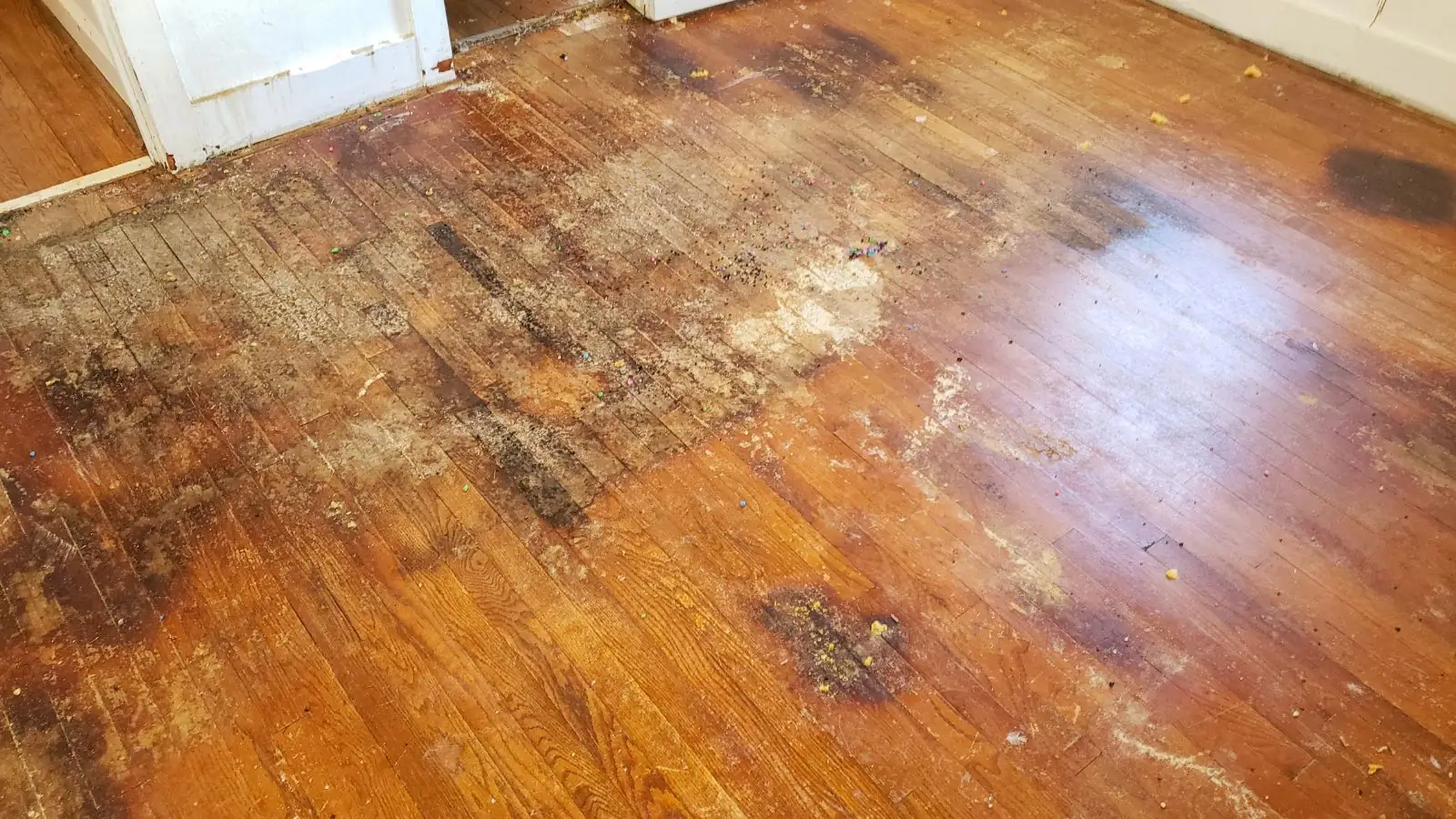
A musty smell after water damage is frustrating because everything looks dry. The carpet has been cleaned, the stain has been painted and the room still smells like a damp cellar. The smell is a sign that moisture remains somewhere, and the job is to find it. Masking the odor with air fresheners does not help, because the source is still there.
What the smell means
The earthy odor people call musty is usually produced by microbial growth on damp materials. It can also come from trapped moisture in wood or insulation that has not grown anything yet. Either way, it tells you that a material is wetter than it should be. The goal is to find that material and dry it or remove it.
Do not use ozone machines or heavy fragrances as a first step. They can cover the smell without addressing the moisture, and the smell comes back.
Where moisture hides
Under flooring
Water that wicked under hardwood, laminate or vinyl stays in the subfloor, and the surface can look fine.
Inside walls
Insulation and the back of drywall hold water long after the face feels dry.
Behind baseboards and cabinets
Toe kicks and trim hide wet framing and wet cabinet bases.
Above ceilings
Insulation above a repaired ceiling can still be damp.
In ductwork and vents
Water that reached a floor register can wet the duct and carry odors through the house.
In carpet pad
Pad that was not removed or dried stays wet and smells.
How to find it
A moisture meter reads wetness in drywall, wood and some other materials without damage. A thermal camera shows temperature differences that often mark wet areas. Together they show where to look. A technician may also open a small section of wall or lift a floor edge to check the cavity.
You can do a rough check yourself. Smell near baseboards, inside closets and under the edges of carpet. Notice whether the smell is stronger on humid days. Write down where it is strongest and tell the technician.
| Where the smell is strongest | Likely source | Next step |
|---|---|---|
| Near the floor in one room | Wet pad or subfloor | Moisture check, lift edge |
| Along an exterior wall | Wet cavity or insulation | Meter and thermal scan |
| Near a ceiling stain | Wet insulation above | Check the attic or the space above |
| When the HVAC runs | Wet duct or an air handler leak | HVAC technician and moisture check |
| In a closet | Damp wall or low airflow | Meter, airflow, humidity |
Water damage in progress?
Call the 24/7 line and describe what you see.
Dry it, then check it again
If moisture is found, it has to be dried with air movers and dehumidifiers, or the wet material has to be removed. The structural drying page explains how and when a crew says it is dry. Odor that remains after readings reach normal may point to growth on a surface, and the mold remediation page explains testing and removal.
Control humidity during and after drying. A room that stays damp keeps feeding the smell. A hygrometer shows the humidity, and a dehumidifier in a basement or a closed room makes a difference.
When to call a professional
Call if the smell persists for more than a few days, if you can see staining, or if the smell follows a flood, a long leak or a sewage backup. A professional can read the building and tell you what is going on. A single visit with the right meters is often enough to find the source.
Why odors return
An odor that fades and then returns on humid days means moisture is still cycling through the material. Materials that were wet and only dried at the surface release odor each time humidity rises. The fix is to dry them completely or remove them.
Odor can also come from drains, sump pits and dry traps, and those are plumbing issues. Pour water into floor drains that are rarely used, and check that sump pit covers are sealed. If the smell is sewage-like, stop using water and call a plumber.
A New Canaan note
In older homes near Town Center, plaster walls, old plumbing and stone foundations can all hold moisture in ways that new construction does not. Tell the technician how old the house is.
Homes in lower areas such as Silvermine may see damp conditions after heavy rain. The 2021 remnants of Hurricane Ida left some town basements wet that had never been wet before, and a basement that stays damp afterward often smells.
What to do while you wait
Open windows when the weather allows, run exhaust fans and keep a dehumidifier going. Move fabric items out of the room, since cloth absorbs odor. Do not store boxes on a damp floor. Keep notes on where the smell is worst and when, because patterns help a technician narrow the search.
Common questions
Why does my house smell musty even though everything is dry?
Surfaces can feel dry while materials behind them are damp. A moisture meter and thermal camera find the hidden wet area.
Will an air purifier fix a musty smell?
It may reduce the smell but does not remove the moisture that causes it. Find and dry the source.
Could the smell be coming from my HVAC?
It can, if water reached a duct or the air handler. A technician can check the system.
My New Canaan basement smells after every heavy rain. Why?
Rain can raise groundwater and push moisture through foundation walls. A dehumidifier, grading and drainage work and a moisture check help.