
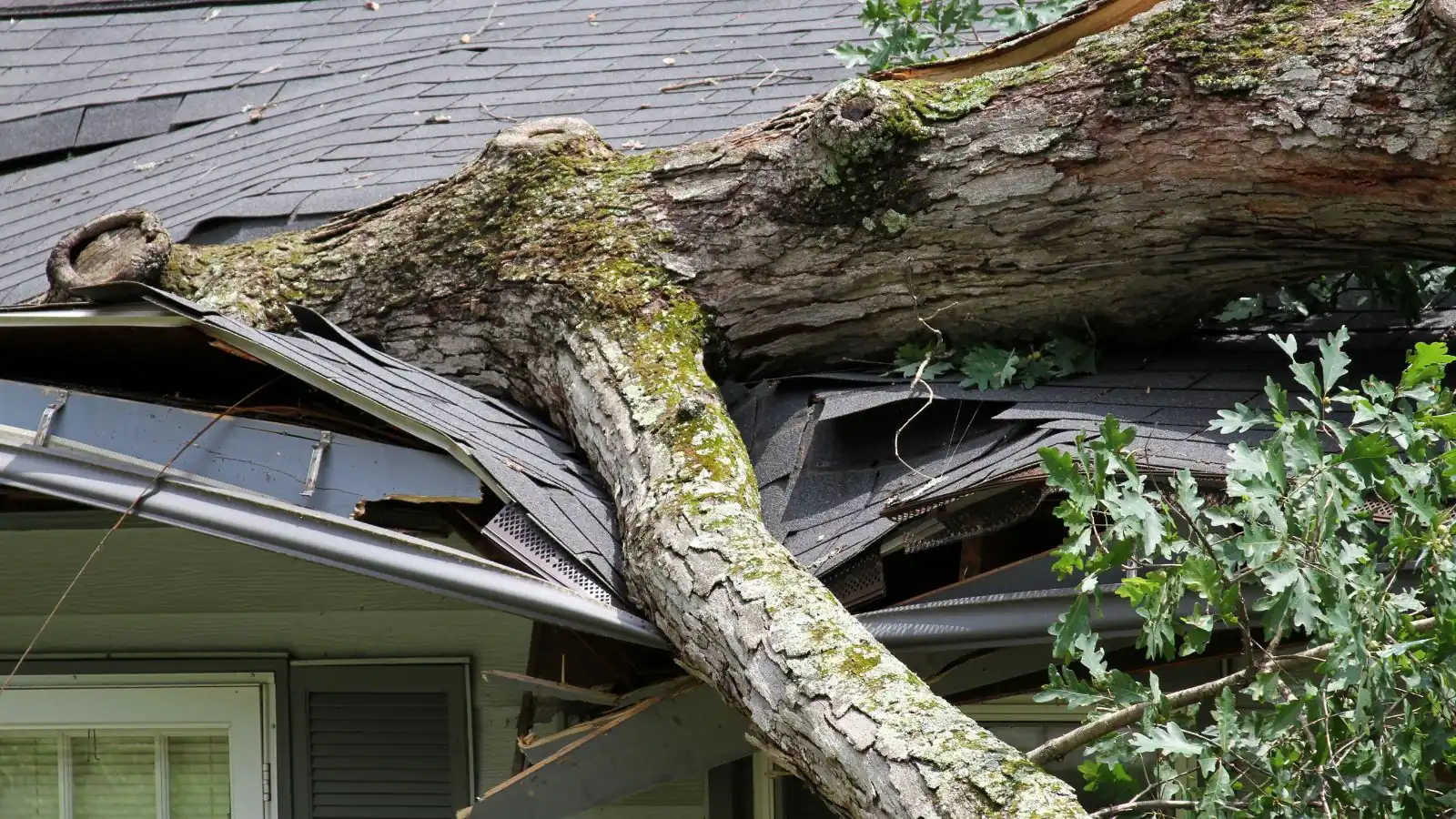
Most storm water damage comes from a short list of problems. Gutters that overflow, sump pumps that stop, roofs and windows that leak and basements without a backup plan. You cannot prevent a storm, but you can reduce what it does. The checklist below is organized by area, so you can do it in an afternoon.
Outside the house
- Clean gutters and downspouts, and extend downspouts so water lands away from the foundation.
- Check that soil slopes away from the house and not toward it.
- Look at the roof from the ground for missing or lifted shingles and failed flashing.
- Trim branches that hang over the roof and remove dead limbs.
- Clear storm drains and yard drains of leaves.
Many storm leaks start as small roof or flashing problems. A roofer can check them before the season. If a storm opens a roof, ceiling water damage repair explains what to expect inside.
In the basement and utility areas
- Test the sump pump by pouring water into the pit and watching it start and discharge.
- Consider a battery backup for the pump, since storms often cause power outages.
- Move valuables and stored boxes off the floor to shelves.
- Know where the main water shutoff and the electrical panel are.
- Keep a flashlight and a phone charger where you can reach them.
A basement that floods because the pump lost power is common. The basement water damage page explains what to do if it happens.
Inside the house
- Check ceilings and window sills for stains that show earlier leaks.
- Check around windows and doors for failed caulk or weatherstripping.
- Photograph each room and the contents for your records.
- Keep a folder with your policy, the agent's number and the claim line.
| Weak point | What goes wrong | Quick fix |
|---|---|---|
| Clogged gutter | Water spills at the foundation | Clean and extend downspouts |
| Sump pump with no backup | Pump stops in a power outage | Test it and add a battery backup |
| Aging roof flashing | Water enters at a seam | Have a roofer inspect it |
| Basement floor storage | Items soak in a small flood | Move to shelves |
| No photos of the house | Harder to document later | Photograph each room now |
Insurance before the storm
Read your policy now. Flood is excluded from standard homeowners policies, according to the Connecticut Insurance Department, and flood policies typically have a waiting period of about 30 days. If you want flood coverage, the time to buy it is before the storm. Ask your agent about a water backup endorsement as well.
Water damage in progress?
Call the 24/7 line and describe what you see.
A simple storm-day plan
On the day a major storm is forecast, charge phones and flashlights, move vehicles away from large trees and bring in anything that can blow around. Fill a few containers with water in case service is interrupted. Move valuables from the bottom floor and put important papers in a waterproof bag.
During the storm, stay away from windows and basements with standing water. If the power fails, do not walk into a flooded basement to check the pump. After the storm, walk the house in daylight, photograph any damage and call your insurer early.
Keep the number for your utility, your insurer and a restoration line in your phone, so you are not searching when the lights are out. Write them on paper as well. Phones run out of battery faster than people expect during a long outage.
Windows, doors and the roof edge
Wind-driven rain finds gaps. Check caulk around windows, weatherstripping on doors and the seal at the bottom of garage doors. A bead of caulk costs little and stops a lot of water. Look at the roof edge and the chimney for gaps and failed flashing.
If you have storm windows or shutters, make sure they close and latch. Skylights deserve a look, since they are a common leak point. After heavy wind, check them again.
A New Canaan note
Tropical Storm Isaias in 2020 left more than 85 percent of New Canaan without power at first, which stopped sump pumps and heating across town. In 2021 the remnants of Hurricane Ida caused basement flooding in some homes that had never flooded before and washed out roadway on Turner Hill and Valley Road. Both events are good reminders to prepare for loss of power as well as for rain.
Wooded lots in Ponus Ridge and Talmadge Hill are exposed to fallen limbs, so tree care counts as storm preparation. FEMA proposed updated flood hazard determinations for New Canaan in 2024, and you can check your address at msc.fema.gov.
If water gets in anyway
Call a restoration crew quickly. Standing water, wet insulation and wet carpet pad need to be dealt with in the first day or so. The water extraction page explains the first stage. Keep your photos, keep receipts and call your insurer. Preparation does not promise a dry house, but it keeps a storm from becoming a larger loss.
Common questions
When should I test my sump pump?
Before the wet season and after any long dry spell. Pour water into the pit and watch it start and discharge.
Do I need a battery backup for my sump pump?
If you have a basement that has taken on water, a backup is worth considering, since storms often cause outages.
Where can I check flood maps for my New Canaan address?
The FEMA Map Service Center at msc.fema.gov, or the Inland Wetlands office at Town Hall.
What should I photograph before a storm?
Each room, the contents of the basement and the exterior of the house, with the date stored on the photos.